Micron approaches $1tn as UBS sees a path to $1.8tn over 12 months
The business move
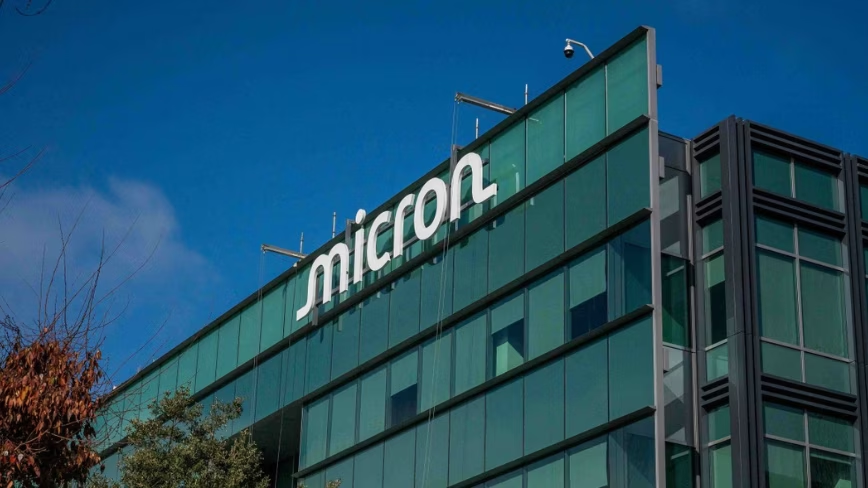
UBS analyst Timothy Arcuri raised Micron Technology’s price target from $535 billion to $1.625 trillion, citing new long-term supply agreements for high-bandwidth memory (HBM). This abruptly revalues the company, with shares jumping as much as 19% in response. Arcuri projects Micron could reach a $1.8 trillion valuation within 12 months by capturing a structural duopoly position in the memory market that disrupts the historic boom-and-bust cycles.
Why it matters
Memory chip businesses have long suffered price volatility from unpredictable supply dynamics. HBM supply deals locking in demand make Micron’s market share and pricing power far more stable. If this structural duopoly thesis holds, it shifts investor expectations and financing conditions for Micron and competitors. Investors should expect less cyclical risk and potentially higher margins in memory production. For customers and data center operators, a less volatile memory supply chain could ease budgeting and scaling decisions for AI workloads that rely heavily on HBM chips.
Who gains and who gets squeezed
Micron stands to gain substantial market value and pricing leverage as this duopoly cements. Competitors outside the duopoly, or those without similar long-term contracts, face pricing pressure and margin risk. End users reliant on affordable memory might confront higher costs as supply tightens and pricing power consolidates. Meanwhile, investors betting on boom-bust volatility in memory stocks should reconsider strategies as structural shifts reduce variance but heighten concentration risk.
What to watch next
Monitor follow-through in Micron’s contract execution and revenue growth tied to HBM supply deals. Watch competitor moves—whether they forge similar long-term agreements or cede ground. Tracking memory price trends will reveal if the boom-bust cycles truly collapse into more predictable duopoly dynamics. Finally, investor reactions and valuation multiples across the chip sector will confirm how entrenched this new risk/reward profile becomes.
AI Quick Briefs Editorial Desk