Meet Memory OS: A 6-Layer Open-Source Memory Stack Built on Top of Hermes Agent
What changed
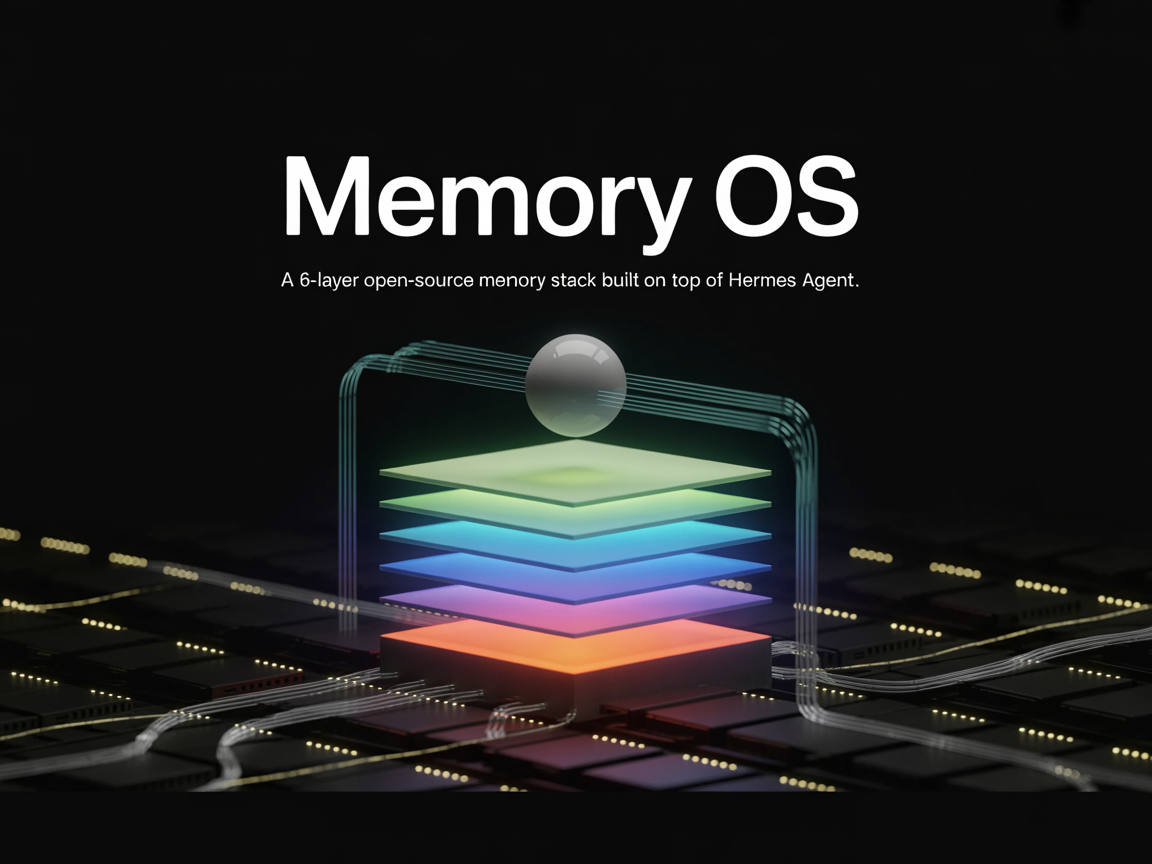
Memory OS launched as a new open-source memory stack built on top of the Hermes Agent. It adds local persistent memory structured through six distinct layers. The stack combines gated retrieval mechanisms with an integrated wiki to improve memory management for AI agents. This means the Hermes Agent can now handle larger, more durable memory without relying on external or cloud-based storage.
Why builders should care
Memory OS addresses a key operational bottleneck faced by autonomous AI agents: retaining and accessing relevant memory efficiently over time. Local persistence cuts down on latency and dependency on third-party services. The 6-layer architecture offers granular control, allowing developers to customize what the agent recalls and when. The gated retrieval process helps filter information contextually, reducing noise and improving decision accuracy. This makes it easier to implement agents that require a deeper understanding of history, context, or user preferences.
The practical takeaway
For AI developers and product teams, Memory OS means building smarter agents that maintain useful memory locally without excessive integration overhead. The open-source nature allows quick experimentation and adaptation to specific use cases, from personal assistants to complex automation workflows. Operating agents with durable memory on-device could also reduce operational costs and improve data privacy by minimizing data transfers. The built-in wiki approach organizes information effectively, streamlining retrieval for real-time queries.
What to watch next
Monitor how quickly the Memory OS project attracts community contributions and real-world adoption. Its success depends on how easy it integrates with existing AI workflows and whether it can scale without sacrificing performance. Also watch for new features around memory security and updates that optimize gating and retrieval algorithms. Integration with other agents or platforms could accelerate practical deployments and influence broader agent designs in the open-source AI space.
AI Quick Briefs Editorial Desk