Lawrence Wong holds the line: AI will not produce jobless growth in Singapore
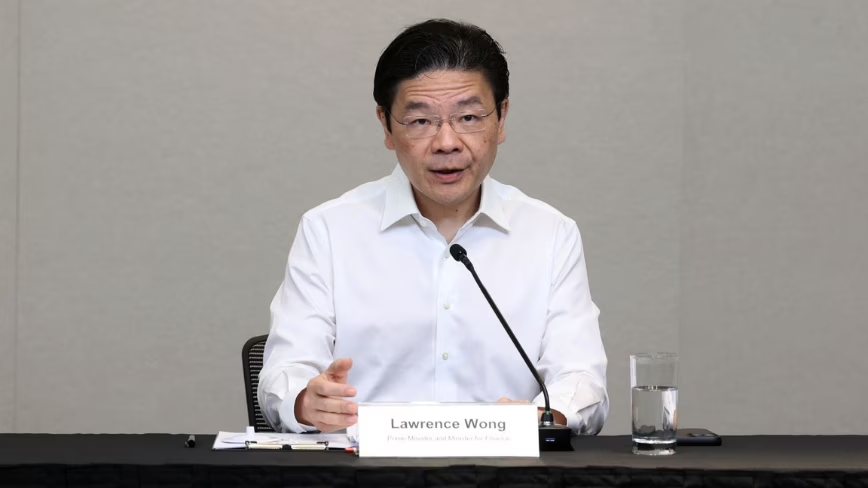
Singapore’s Parliament has made a firm promise to prevent jobless growth as artificial intelligence reshapes the economy, reaffirming Prime Minister Lawrence Wong’s stance from earlier this year. This commitment comes amid global concerns that AI could automate jobs faster than new roles are created, potentially leaving many workers unemployed. Singapore’s leadership is clearly signaling that economic progress driven by AI will need to translate into real employment opportunities rather than just productivity gains.
This pledge matters for anyone working or doing business in Singapore because it shows the government is actively addressing the impact of AI on the labor market. Instead of resisting AI adoption or ignoring its effects, Singapore is setting expectations that advancements in AI technology will be accompanied by policies to help workers transition into new kinds of jobs. This approach aims to protect workers from displacement while still enabling companies to innovate and improve efficiency, offering a balanced path in handling AI’s economic impact.
The context behind this comes from debates happening worldwide about AI’s role in boosting productivity without creating enough jobs. Traditional economic growth was closely tied to job creation, but AI raises the risk that machines could replace human labor in many sectors, causing “jobless growth.” Singapore’s government sees this danger and is proactively using its budget planning and regulatory powers to support worker retraining, education, and inclusive growth. This fits with Singapore’s history of careful economic planning and efforts to build a future-ready workforce.
The strong statement from Lawrence Wong and Parliament sends a clear message that job displacement from AI will be met with coordinated policy responses. It signals that Singapore is not only focusing on AI innovation but also on social stability and workforce resilience. Other governments may watch this as a model for managing AI’s risks and rewards. Companies and developers should expect that AI deployments in Singapore will likely be accompanied by support for worker adaptation. The real question now is how these promises will be implemented in practice, especially as AI technologies evolve rapidly.
Singapore’s emphasis on avoiding jobless growth underscores a broader trend where economic advancement must be inclusive. This approach sets a benchmark for countries grappling with AI-driven disruption. Stakeholders should keep an eye on Singapore’s educational programs, labor policies, and how AI-integrated sectors develop in the coming years to understand the effectiveness of this strategy.
— AI Quick Briefs Editorial Desk