Ilya Sutskever discloses $7bn OpenAI stake during Musk-OpenAI litigation
What happened
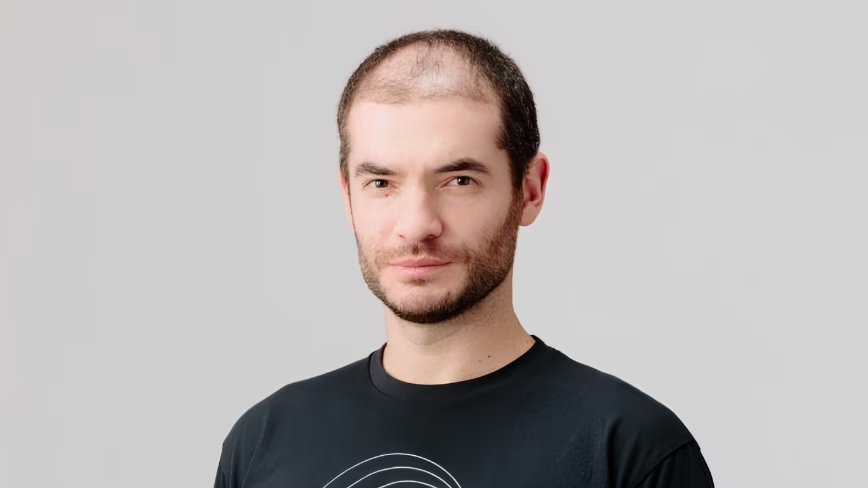
Ilya Sutskever, formerly OpenAI’s chief scientist and now CEO of Safe Superintelligence Inc., disclosed under oath during the ongoing litigation involving Elon Musk and OpenAI that he holds a $7 billion ownership stake in OpenAI. This figure places Sutskever among the largest individual shareholders in the company, a detail not previously public. The revelation came during court testimony connected to Musk’s legal claims against OpenAI.
Why it matters
Sutskever’s stake sharpens the picture of power distribution inside OpenAI, highlighting how key technical leaders maintain significant financial and strategic influence. For investors and competitors, it signals that the people shaping OpenAI’s AI roadmap are deeply invested beyond salaries or stock options. This level of ownership could affect decision-making priorities and internal governance, especially when high-profile disputes arise, like the Musk litigation. It also underscores how much financial value has accumulated in AI talent versus just external capital backers.
From an operator standpoint, knowing who really controls the technology and direction can inform partnership, hiring, and investment decisions. The heavy investment by a core scientist suggests strong alignment behind OpenAI’s technical vision, but also raises questions about potential conflicts of interest or centralized control in a company shaping powerful AI tools.
What to watch next
The litigation between Elon Musk and OpenAI will likely push out more details on OpenAI’s internal structure and shareholder makeup, which could reshape public and regulatory views of the company’s governance. Observers should track whether Sutskever’s role as a shareholder influences OpenAI’s strategic choices or response to external pressures like regulation or industry competition.
Investors and founders in AI startups should also watch how key talent equity stakes evolve as AI companies scale, since ownership concentration can alter incentives for innovation and transparency. This could affect how operators negotiate deals, manage risk, or anticipate future AI development paths.
AI Quick Briefs Editorial Desk