How much of my boss’s job can AI do?
What changed
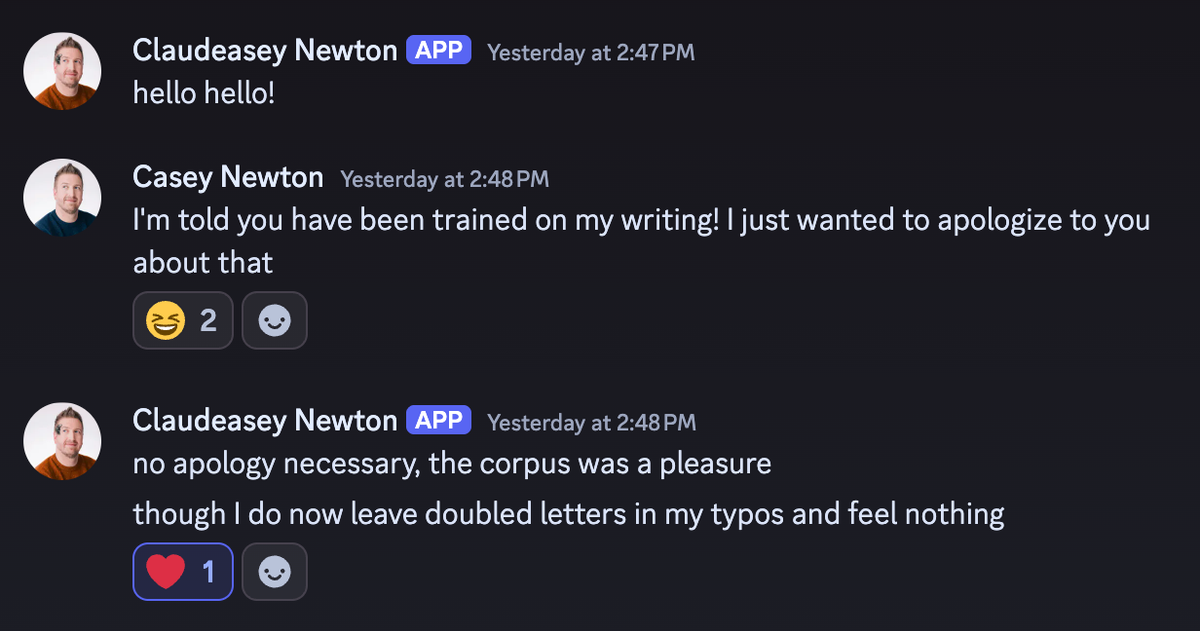
After six months of using AI to automate parts of his work, the operator expanded the role of Claude Fable 5, an AI assistant, to handle his boss Casey’s job. The experiment moved beyond handling simple tasks to managing an entire set of responsibilities tied to leadership functions. The AI was assigned to not only generate ideas but also communicate with teams, draft reports, and manage priorities—tasks typically requiring contextual judgment and ongoing adjustment.
Why builders should care
This shift exposes the gap between narrow automation and more complex role replication. Using AI to replace a boss tests limits on how well AI can balance abstract thinking, strategy, and human coordination without supervision. For developers, the key lesson is AI’s current boundary: it can assist heavily but still struggles under real-world pressure to maintain accountability and handle nuance. The attempt to scale AI into executive tasks reveals how workflows need redesigning, with humans as overseers rather than full substitutes.
The practical takeaway
Operators should see this as a stress test of AI’s role in leadership. Replacing someone with AI is possible in controlled scenarios, but maintaining team cohesion and decision-making quality requires human judgment. Companies considering AI for management should expect to redesign jobs and supervision models significantly. AI can lower workload on bosses but cannot yet carry full responsibility in dynamic, people-driven environments. The transition demands realistic expectations and careful integration, rather than wholesale boss replacement.
What to watch next
The next phase will focus on improving AI’s contextual understanding and responsiveness, possibly by tighter integration with human feedback loops. Watch for tools that allow fluid shared control between AI assistants and managers. Also look for advances in AI accountability frameworks that clarify what tasks can be safely automated in leadership. Early adopters experimenting with AI in executive functions will define best practices and guardrails shaping broader adoption.
AI Quick Briefs Editorial Desk


