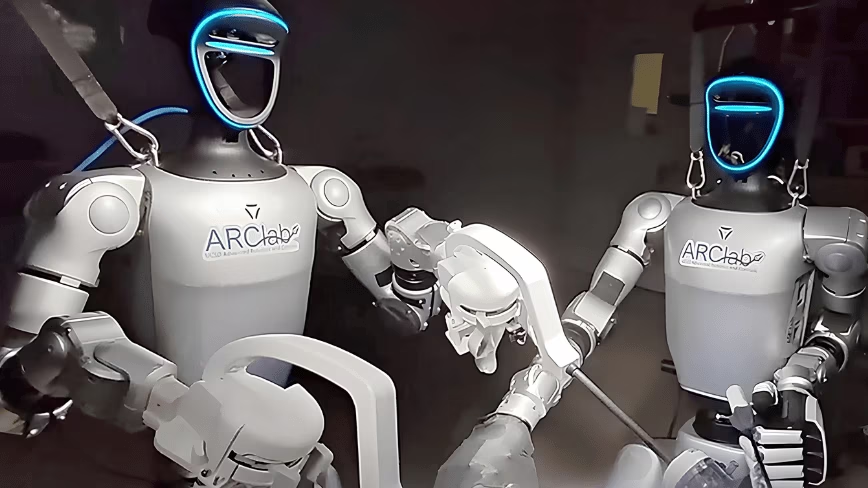
Home robots already walk. 1X’s new hands try to solve the part that actually matters
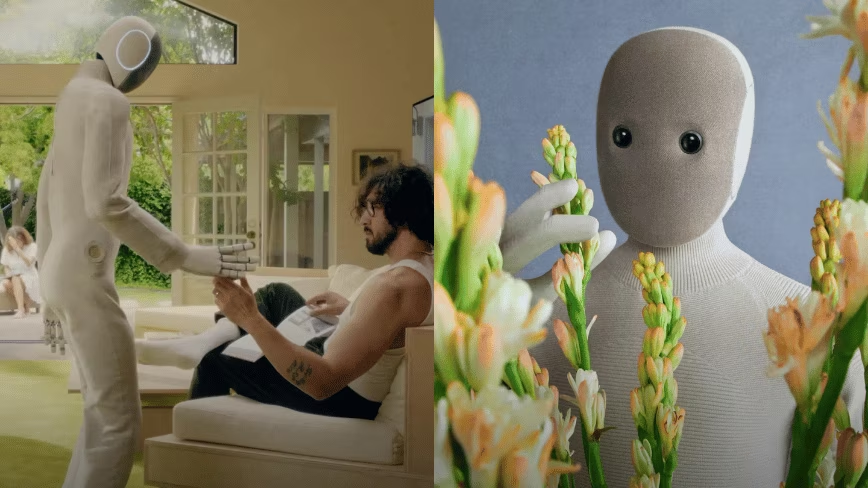
What happened
1X has upgraded its NEO home robot with new tendon-driven hands designed to address the key challenge roboticists face: dexterous manipulation. Though humanoid robots have managed to walk and perform basic movements for years, their hands remain the limiting factor in practical tasks. The NEO’s new hands aim to grasp and handle everyday objects, like lifting a wet glass, with enough precision and speed to be genuinely useful in home environments.
Why it matters
Mobility alone does not make a robot practical for most real-world applications. A robot that strides confidently across a stage but fails to handle fragile, wet, or oddly shaped items in a kitchen remains broadly useless. The improved dexterity in NEO’s hands pressures the robotics field to refocus on fine motor skills instead of just locomotion. This shift makes robots more applicable for service roles, household chores, and other physical interactions demanding precise touch and grip. For operators or founders eyeing home robotics, this signals progress in reducing one of the biggest technical barriers to commercial viability.
What to watch next
First, watch how well the NEO’s hands perform outside controlled demos—especially in real kitchens or cluttered homes. Robustness and reliability will determine if this advance actually lowers operational downtime and intervention costs. Also, look for how 1X scales this tech: can it retrofit older models or integrate into other robot platforms? Lastly, keep an eye on whether competitors accelerate similar developments. Advances here will intensify the race to bring useful humanoid assistants to consumer and commercial markets.
AI Quick Briefs Editorial Desk