Hadrian’s reported $7.5bn round and the physical-AI rush
What happened
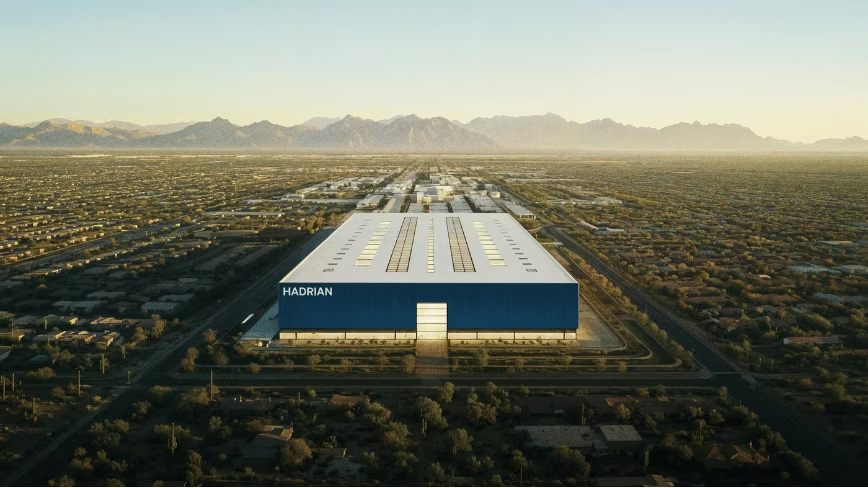
Hadrian Automation, a US defense manufacturing startup, has been reported by Bloomberg to be in talks to raise nearly $1 billion at a $7.5 billion valuation. Hadrian pushed back on this figure, calling it inaccurate. Regardless of the exact numbers, the rumor highlights increased investor interest in physical AI companies and the growing focus on reindustrializing American manufacturing.
Why it matters
The buzz around Hadrian underscores a crucial shift toward automating complex industrial tasks with AI-driven robotics. Physical AI is moving beyond software and cloud to tangible hardware that can reshape factory floors, reduce reliance on overseas manufacturing, and bolster national security in defense supply chains. For startups and investors, this signals willingness to pour large capital into automation that combines AI with real-world production, not just code. That inflow of capital accelerates development timelines and heightens competition for talent and strategic partnerships.
For operators and founders, the signal is clear: physical AI—where software meets robotics and manufacturing—is becoming a core battlefield in US industrial competitiveness. If Hadrian’s valuation talk isn’t exactly right, the fact it’s circulating at all pressures competitors and partners to consider their valuations and technology roadmaps carefully. It also raises the stakes for proving real-world productivity gains beyond hype.
What to watch next
Keep an eye on Hadrian’s official funding announcements to clarify the size and valuation of its next round. Watch for how the startup expands its physical AI automation systems into defense contracts and other manufacturing sectors. Competitors and new entrants will either try to match these capital moves or focus on niche improvements to offset scale advantages.
More broadly, the flow of capital to physical AI startups will influence how quickly US industrial automation upgrades. Take note of how this reindustrialization momentum affects supply chain resilience, labor shifts, and domestic production costs. Investors and operators should track emerging partnerships between AI robotics companies and traditional manufacturing players—they will shape who wins the race in future factory automation.
AI Quick Briefs Editorial Desk