Guardrails for LLMs: Measuring AI ‘Hallucination’ and Verbosity
What changed
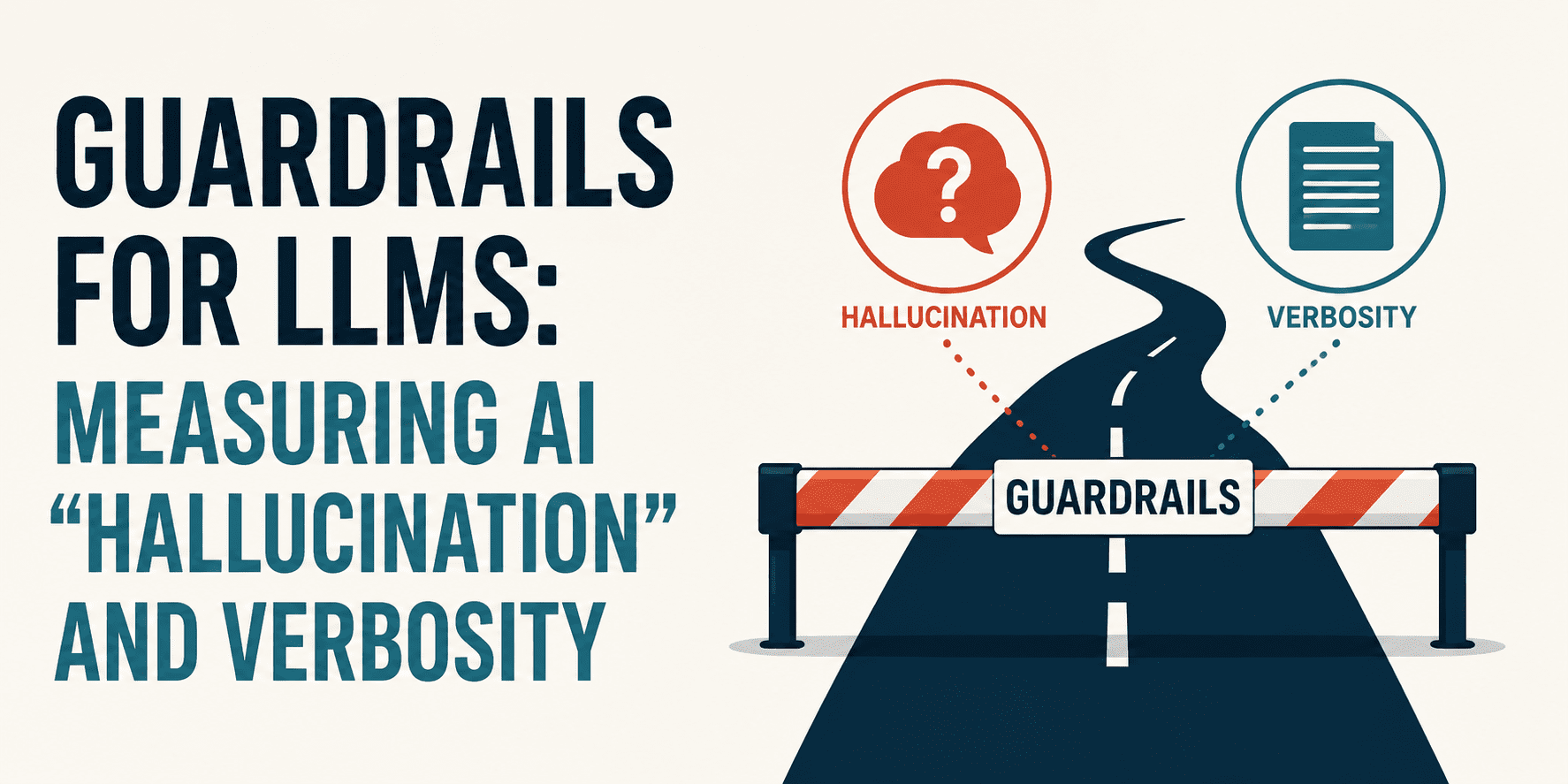
Measuring and controlling hallucination and verbosity in large language models (LLMs) has moved beyond theory to practical infrastructure challenges. Organizations building with LLMs now face the real task of quantifying when these models stray from facts or flood users with excessive, irrelevant detail. To address this, new methodologies focus on defining key guardrails—metrics and feedback loops—that track hallucination rates and verbosity levels during runtime. This infrastructure can systematically trigger warnings or tune prompts to tighten response fidelity and length.
Why builders should care
Ignoring hallucination risks users receiving wildly inaccurate or fabricated information, which damages trust and could cause legal and ethical fallout. Excess verbosity clutters interfaces and wastes compute, raising operational costs while frustrating users. Without reliable measurement and control frameworks, LLM deployments often remain brittle or require costly manual oversight. Builders who implement robust guardrails gain finer control over model outputs, reducing risk and improving user experience at scale.
The practical takeaway
Building tailored metrics for hallucination involves cross-referencing model output against known facts or trusted data sources, then scoring accuracy with automation-friendly tests. Verbosity measurement typically tracks length thresholds, redundancy, or off-topic content, flagging outputs that drift. These signals feed automated adjustment layers—like prompt tweaks or conditional model re-runs—to refine responses dynamically. The effort translates directly into faster ops cycles, fewer human reviews, and smoother AI product launches.
What to watch next
Expect emerging tools and open frameworks to integrate hallucination and verbosity measurement as standard features in LLM APIs and platforms. Look for start-ups and incumbents to incorporate real-time output scoring and correction into their offerings, shifting the balance from reactive fixes to proactive guardrails. As regulatory scrutiny intensifies on AI accuracy, practical measurement systems could also become compliance essentials. Builders should watch evolving best practices and new benchmarks defining acceptable hallucination and verbosity levels across applications.
AI Quick Briefs Editorial Desk