Google’s $100 Fitbit Air has no screen. The product it is actually selling is a $10-a-month AI health coach.
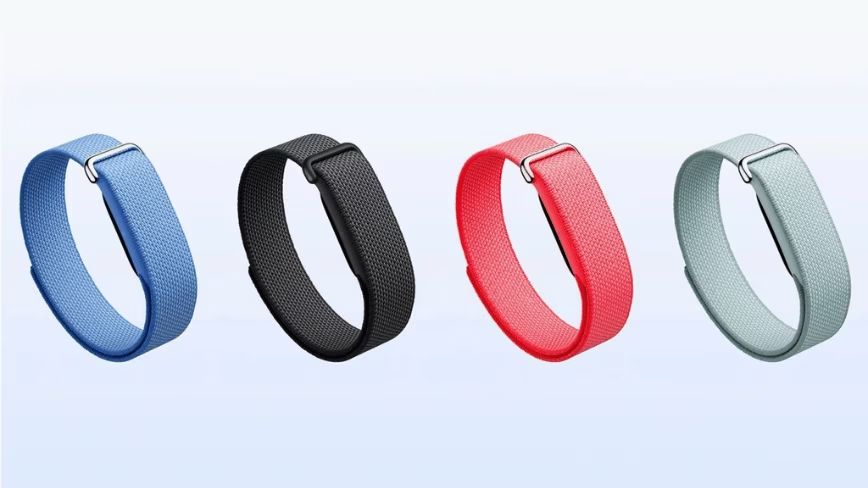
Google has introduced the Fitbit Air, a $100 wearable device that notably lacks a screen, buttons, or any standalone features. Instead of functioning as a traditional fitness tracker, Fitbit Air relies heavily on a $10-a-month subscription service that offers an AI-powered health coach. The device itself is essentially a lightweight fabric band with a small sensor pack that monitors metrics like heart rate and steps. The real product Google is promoting is the continuous AI-driven coaching experience delivered through its subscription model.
This move highlights a significant shift in how health tracking companies are positioning their products. Google is steering away from selling hardware-based fitness gadgets toward subscription services that provide personalized, ongoing health insights via AI. For consumers, this means the initial hardware cost may be low, but ongoing value depends on paying for AI coaching. For developers and businesses, it signals growing importance of artificial intelligence in health and wellness sectors, focusing on software and data services rather than just hardware sales.
The story behind Fitbit’s evolution starts with Google’s $2.1 billion acquisition in 2021, followed by a gradual dismantling and absorption of Fitbit’s original brand identity. Fitbit once competed with screen-based smartwatches and standalone fitness trackers. Google’s new approach solves some key challenges, such as battery life and screen usability, by eliminating the screen entirely. Instead, fitness data is fed into AI algorithms designed to offer real-time, personalized health advice and motivation. This fits into a broader AI trend where wearable devices gather raw data but the true value lies in intelligent software that interprets and guides lifestyle changes.
What this launch signals is a maturation of AI integration in personal health tech. The clear pivot to subscription-based AI health coaching suggests companies will increasingly rely on continuous software-driven interaction for user retention and revenue. Watch for more devices shedding traditional features like screens in favor of seamless sensor integration combined with AI services. This may also intensify competition with other AI-native health platforms, potentially raising ethical and privacy considerations given the reliance on sensitive health data. Google’s next moves likely include further building out AI coaching capabilities and integrating deeper with its broader health data ecosystem.
— AI Quick Briefs Editorial Desk