Google killed the Chromebook. Its replacement turns your cursor into an AI agent.
What happened
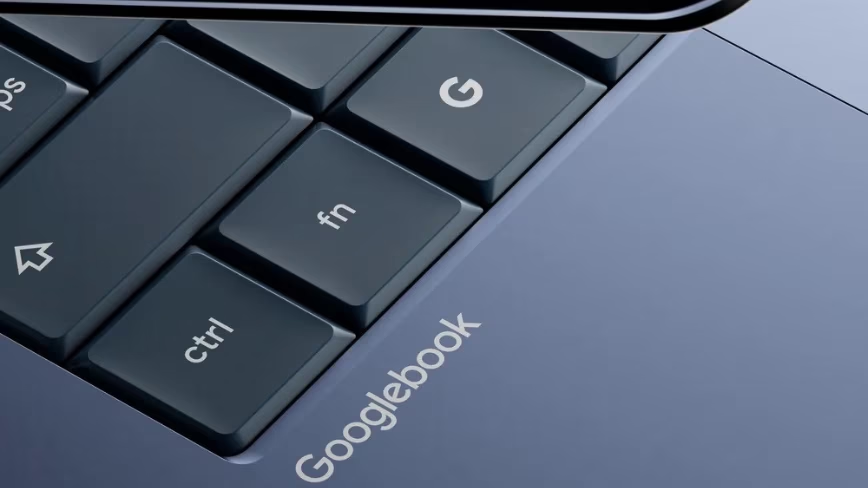
Google announced it is discontinuing the Chromebook after 15 years, replacing it with a new product line called Googlebook. This fresh category of premium laptops runs Android as the operating system and integrates Google’s Gemini AI at the OS level. The Googlebooks will start shipping this autumn and aim to offer a deeper AI experience directly baked into the hardware and software, unlike the browser-centric approach that defined Chromebooks.
Why it matters
Chromebooks were built around Chrome OS, effectively a browser-based operating system designed for simplicity and cloud reliance. Google now recognizes a browser alone can limit user interaction and AI integration. Embedding Gemini AI into the OS signals a shift toward more intelligent, agent-driven user experiences that move beyond just browsing and apps. This pressures competing laptop makers and software platforms to rethink how AI can actively assist users across workflows. For users and businesses, expect more contextual, AI-powered automation embedded deeply in your device instead of relying on separate apps or cloud tools.
What to watch next
Watch for how well Gemini AI adapts as a persistent AI agent controlling the cursor and assisting with tasks at the OS level. The user interaction model will be crucial—Google will need to balance helpfulness with control and transparency. Developers should monitor what new APIs and integration points emerge, since Googlebook could reset expectations around OS architecture and AI-assisted productivity. Also track how competitors respond, especially Microsoft and Apple, who are ramping up their own AI enhancements to laptop environments.
AI Quick Briefs Editorial Desk