Google DeepMind’s new AI model can control a robot’s entire body

What happened
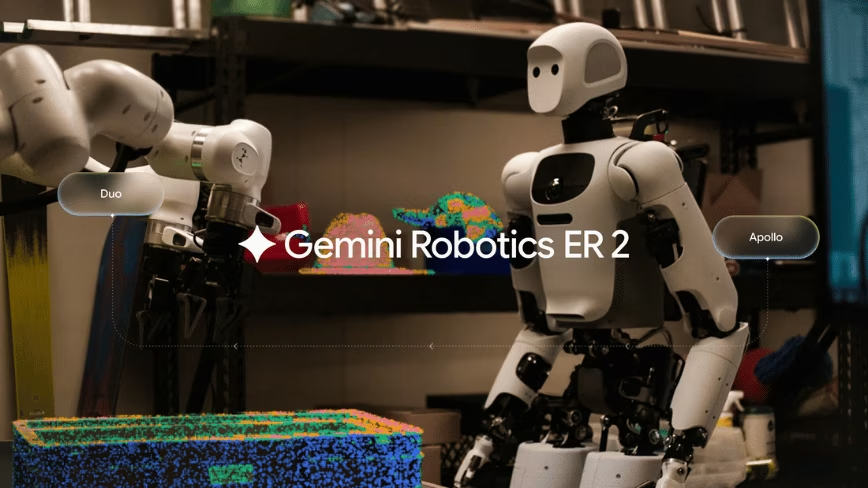
Google DeepMind announced the latest version of its Gemini Robotics AI model, which now controls a robot’s entire body. The previous Gemini Robotics focused on upper-body control, but Gemini Robotics 2 extends motion capabilities to cover full-body coordination, including feet and fingertips. This update was demonstrated with Apptronik’s Apollo 2 humanoid robot performing tasks like taking a baseball glove off a shelf with precise whole-body movement.
Why it matters
Controlling a humanoid robot’s entire body rather than just its upper half significantly expands what those robots can do autonomously. This makes robots more capable in real-world environments where stability, balance, and full-body coordination matter, such as fetching objects from cluttered spaces or navigating uneven terrain. For builders and operators, this model reduces the complexity of programming separate body parts and phases of motion, enabling smoother, more reliable workflows. It also raises expectations for robotic applications in logistics, manufacturing, and service industries that require dexterous handling combined with mobility.
What to watch next
Watch for Gemini Robotics 2 integration beyond prototype demo robots and into commercial systems. The next questions relate to how well this full-body coordination performs under longer and more complex tasks, and how quickly it adapts to changing environments outside controlled settings. Developers should track if this approach scales to different robot designs or if additional tuning and hardware requirements slow deployment. This model also pressures competitors to enhance their own full-body robotics capabilities or risk falling behind in the market for practical humanoid robots.
AI Quick Briefs Editorial Desk