Gemini 3.5 Flash can now see and control your screen, and Google wants enterprises to trust it
What changed
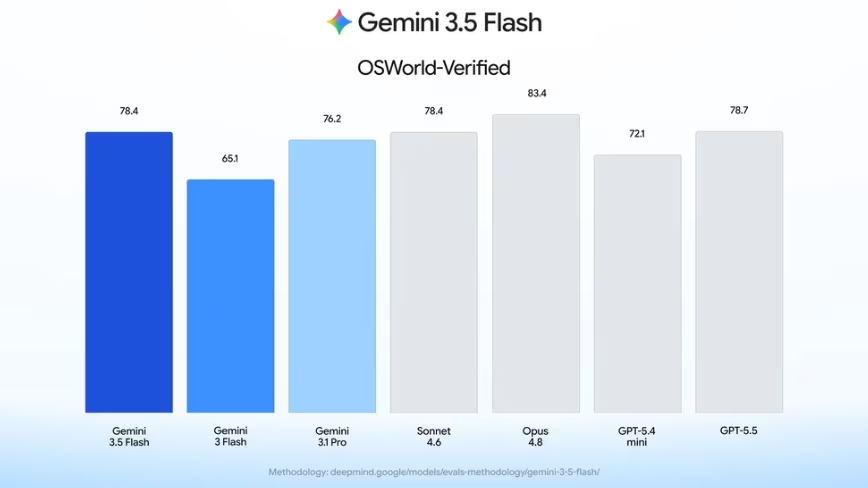
Google has integrated direct computer control into Gemini 3.5 Flash, its fastest agentic AI model launched at I/O 2026. This capability allows the AI to see screens and interact with them by clicking, typing, and scrolling across browsers, desktops, and mobile devices. Previously, this required a separate standalone model, but now it is a built-in feature of Gemini 3.5 Flash.
Why builders should care
For developers and product teams building AI assistants, this integration means fewer moving parts and easier deployment. Instead of orchestrating multiple models or tools to achieve screen control, they get one unified agent capable of complex multi-modal interaction. That streamlines workflows for building contextual AI agents that complete tasks directly on users’ devices and interfaces without switching tools or relying on third-party automation layers.
At the same time, this raises the bar for interface design and security controls. Enterprises wanting to integrate Gemini 3.5 Flash have to trust the model not just with language understanding but with access that can manipulate devices at a granular level. That will require new permissions, logging, and oversight strategies.
The practical takeaway
The change accelerates adoption of AI agents that act more like human operators inside applications instead of just chatbots or recommenders. For customer support teams, this could mean agents that navigate complex account portals without manual intervention. For small businesses, AI could handle routine tasks like filling out forms or managing calendar events with on-screen interaction.
However, this capability raises privacy and security concerns. Enterprises must weigh the productivity gains against potential risks of granting AI models screen access and control. Vetting, monitoring, and access rules become critical.
What to watch next
Expect Google to push this Screen Control ability as a key differentiator for Gemini 3.5 Flash in enterprise AI workflows. Watch for announcements about partnerships with CRM, helpdesk, or device management platforms integrating this tech. How Google handles security and trust issues will be crucial for enterprise uptake.
Additionally, keep an eye on competing AI providers. If integrated screen interaction becomes a baseline expectation, others will need to offer similar or better control mechanisms to remain competitive. This feature could define the next phase of autonomous AI agents acting inside real software environments rather than isolated chat windows.
AI Quick Briefs Editorial Desk