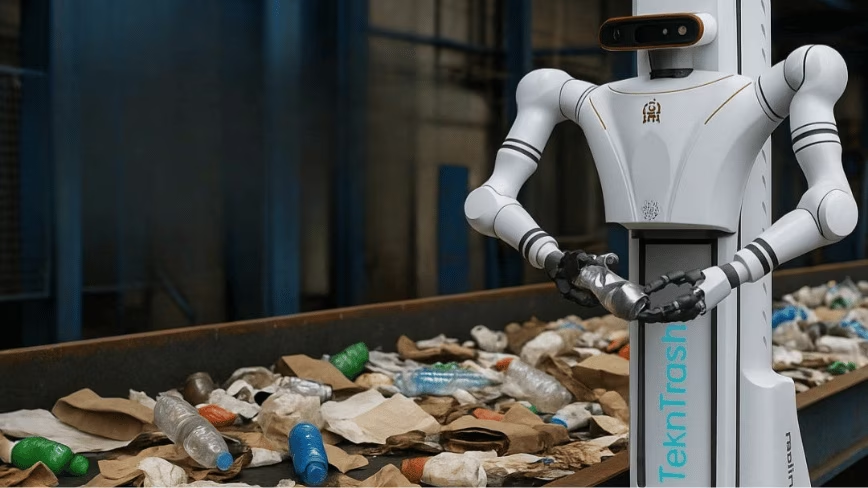
Ford had to hire back former engineers to fix mistakes made by its automated systems

The business move
Ford has publicly shared that to reach the top spot in JD Power’s initial quality ranking among mainstream automakers, it had to rehire its former engineers. The automaker relied heavily on automated systems in production and design, assuming these would improve quality and consistency. However, those robotic systems produced errors requiring experienced hands to fix. In some cases, bringing back retired or former employees who understood the legacy designs and processes was necessary to correct these automated mistakes.
Why it matters
This move reveals a critical limitation in relying too much on automation and AI in complex manufacturing workflows. Automated systems can introduce new types of errors that are not always obvious or easy to resolve, especially without human expertise. For companies investing in AI and robotics to cut costs or speed up production, this shows the risk of hidden quality problems that could damage brand reputation and require expensive human intervention. It also highlights that replacing skilled technicians with automation isn’t a simple trade-off—human knowledge remains essential to catch and correct errors robots miss.
Who gains and who gets squeezed
Ford gains by improving product quality enough to top a stringent industry ranking, which can boost consumer trust and sales. The rehiring approach underscores that engineering talent remains valuable, especially workers with deep institutional knowledge. Suppliers and automation vendors face pressure to improve the reliability and interpretability of their systems to reduce such costly human fixes. Meanwhile, companies that fully automate without backup plans for human troubleshooting risk higher long-term costs and customer dissatisfaction.
What to watch next
Watch whether automakers and other industrial manufacturers adjust automation strategies to balance AI efficiency with human oversight. Improvements in robotic system transparency and error detection will be crucial. Also, monitor if more firms bring retired or former engineers back when automation stumbles, signaling a shift in workforce planning that recognizes the ongoing value of expert human judgment alongside AI tools.
AI Quick Briefs Editorial Desk