Eight months ago Altman wanted an AI CEO. Now he says nobody does.
What happened
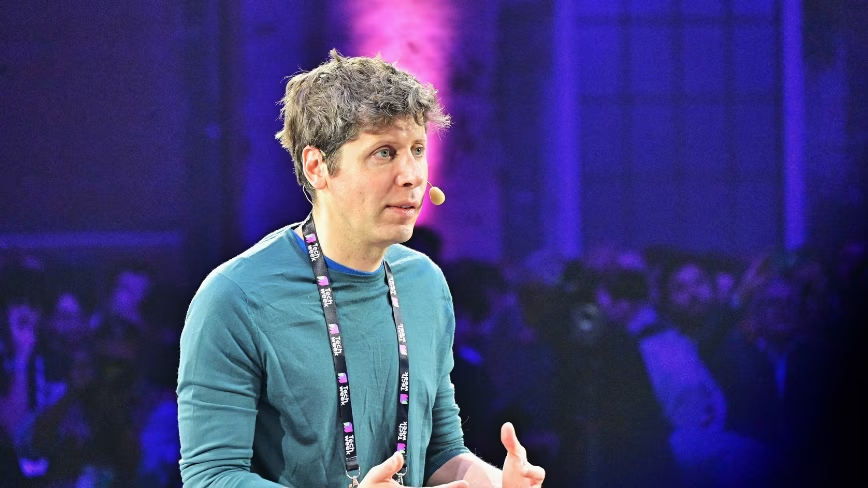
Sam Altman, CEO of OpenAI, reversed his position on having an AI CEO. Eight months ago, he pushed for OpenAI to become the first major company run by an AI boss and said failing to do so would be an embarrassment. Now, Altman says nobody wants an AI CEO at all. He acknowledged that the idea of an AI running a company, once seen as inevitable, has lost appeal among people and organizations.
Why it matters
This reversal pressures AI deployment strategies that prioritize full automation in leadership roles. Investors, founders, and business operators should note the shift away from trusting AI with top-level governance. The change exposes limits in AI’s current capabilities to handle complex human decisions that involve ethics, legal responsibility, and nuance. It also alters incentives for AI startups and toolmakers to focus less on replacing executives and more on augmenting human decision-making.
For companies experimenting with AI-driven leadership or heavy automation, Altman’s position signals that governance, accountability, and cultural fit remain barriers. AI leadership is not yet a commercial or cultural fit for big organizations, even those building AI. This may slow momentum for similar proposals or pilot projects in the near term.
What to watch next
The practical indicator will be how enterprises frame AI’s role in leadership structures going forward. Watch OpenAI and Altman’s next moves for glimpses on what kinds of human-AI collaboration models they will prioritize. Also track regulatory and boardroom reactions to any AI decision-making proposals—these will reveal if the market is ready to re-embrace AI executives or if caution will dominate.
Investors should watch for startups shifting focus from autonomous leadership products to AI tools that support human leaders, executives, or managers. The market’s appetite for AI CEOs, at least for now, looks much smaller than before.
AI Quick Briefs Editorial Desk