Delivery robot startup Robot.com bets its next act on wheeled humanoids for kitchens and warehouses
What happened
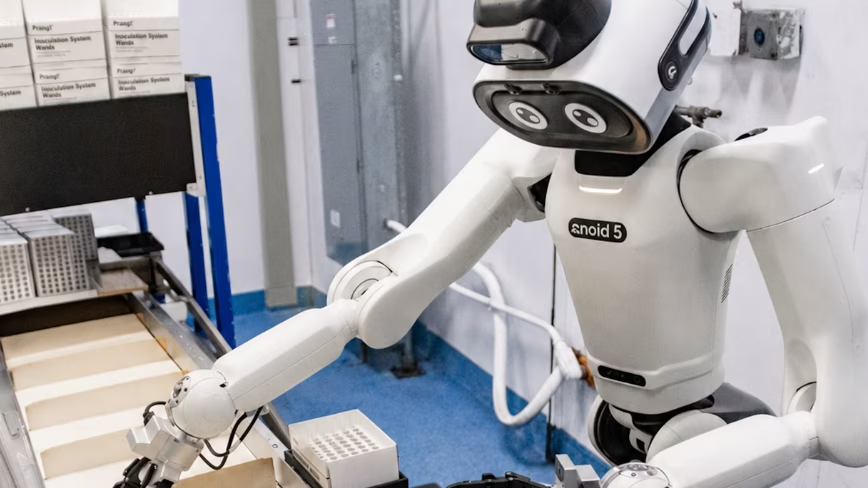
Robot.com, the San Francisco startup formerly known as Kiwibot, is shifting its focus from campus delivery robots to wheeled humanoids for workplaces. The company announced it plans to launch R-noid, a humanoid robot on wheels intended for tasks like packaging orders, loading and unloading boxes, and prepping workstations. Target industries include food service, logistics, and healthcare facilities. CEO Felipe Chavez described this pivot as a move to expand beyond last-mile delivery toward more versatile workplace automation.
Why it matters
The move pressures existing robotics providers that mostly focus on single-purpose machines or traditional robotic arms. R-noid promises more physical intelligence and adaptability by combining humanoid form factors with mobility on wheels. For operators, this could lower labor costs and speed up routine manual tasks without the complexity or footprint of fixed automation. The choice to target multiple industries broadens Robot.com’s potential market, but it also raises the bar for real-world robustness and safety in diverse, human-centric environments.
From an investment and deployment viewpoint, the shift signals confidence in humanoid robotics moving out of labs and into scalable, revenue-generating applications. However, the practical impact will depend on how quickly R-noid integrates with existing workflows and how reliably it performs unstructured tasks like packaging or workstation prep. Real operators will be watching for whether this approach simplifies automation investments or adds a layer of operational complexity.
What to watch next
Proof points will come from commercial pilots or contracts in the targeted sectors. Watch for early deployments in food service or logistics centers where speed and flexibility are critical. The company’s progress in handling diverse physical interactions without human coaching will be a key indicator of viability. Additionally, how Robot.com manages integration with human teams will determine adoption pace. Finally, this pivot could accelerate competition around mobile humanoid robots, prompting a broader reevaluation of automation strategies in workplaces that blend fixed and mobile tasks.
AI Quick Briefs Editorial Desk