Davis raises $5.5m pre-seed to compress real-estate development from months to days
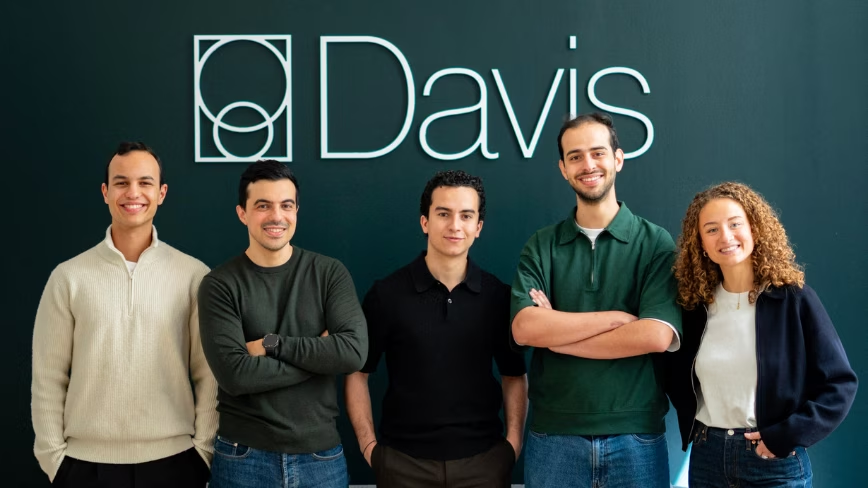
Davis, a Paris-based startup focused on real estate development, has raised $5.5 million in a pre-seed funding round. The round is co-led by Heartcore and Balderton Capital, a notable combination for such an early stage investment. Founded by Mehdi Rais and Amine Chraibi, Davis aims to shorten the typically long and complex real estate development process from several months down to just a few days. The company uses AI to streamline architectural planning and decision-making, improving efficiency for developers.
This matters because real estate development often involves extensive planning, design revisions, and regulatory hurdles that can slow projects and increase costs. By compressing this timeline with AI, Davis is tackling a significant bottleneck. For developers and urban planners, faster project completion could mean reduced expenses, quicker returns, and more responsive adaptation to market demands. For cities and communities, it could enable more agile development that better matches evolving needs without compromising quality or safety.
The background to Davis’s approach stems from broader advancements in generative AI and machine learning, applied specifically to the built environment. Designing buildings and development plans is traditionally labor-intensive, relying on expert architects and manual iterations. AI can analyze zoning laws, structural standards, and design preferences to propose optimized plans instantly. This effort fits within a growing field of AI applications that support creative and technical tasks by accelerating routine, detailed work and enhancing human decision-making.
What makes Davis’s pre-seed raise interesting is not just the amount but the high-profile investors involved so early. It suggests confidence in the startup’s technical foundation and market potential despite the challenges of automating a complex industry. Moving forward, the company’s progress will signal how far AI can realistically push into architectural design and planning. Observers should watch whether Davis can build systems that integrate smoothly with existing regulations and stakeholder needs. Depending on its success, this could inspire more AI-driven innovation in construction, urban planning, and infrastructure development, sectors often seen as lagging in digital transformation.
The real estate industry is ripe for disruption, and Davis’s work hints at what more agile, AI-powered development pipelines might look like. If the startup delivers on its promise, we may see a marked shift in how buildings and neighborhoods are conceived and built—moving faster while maintaining quality and compliance. That would challenge long-standing industry habits and open new avenues for real estate creativity and efficiency.
— AI Quick Briefs Editorial Desk


