Databricks Open-Sources Omnigent: A Meta-Harness That Composes, Governs, and Shares AI Agents Across Claude…
What changed
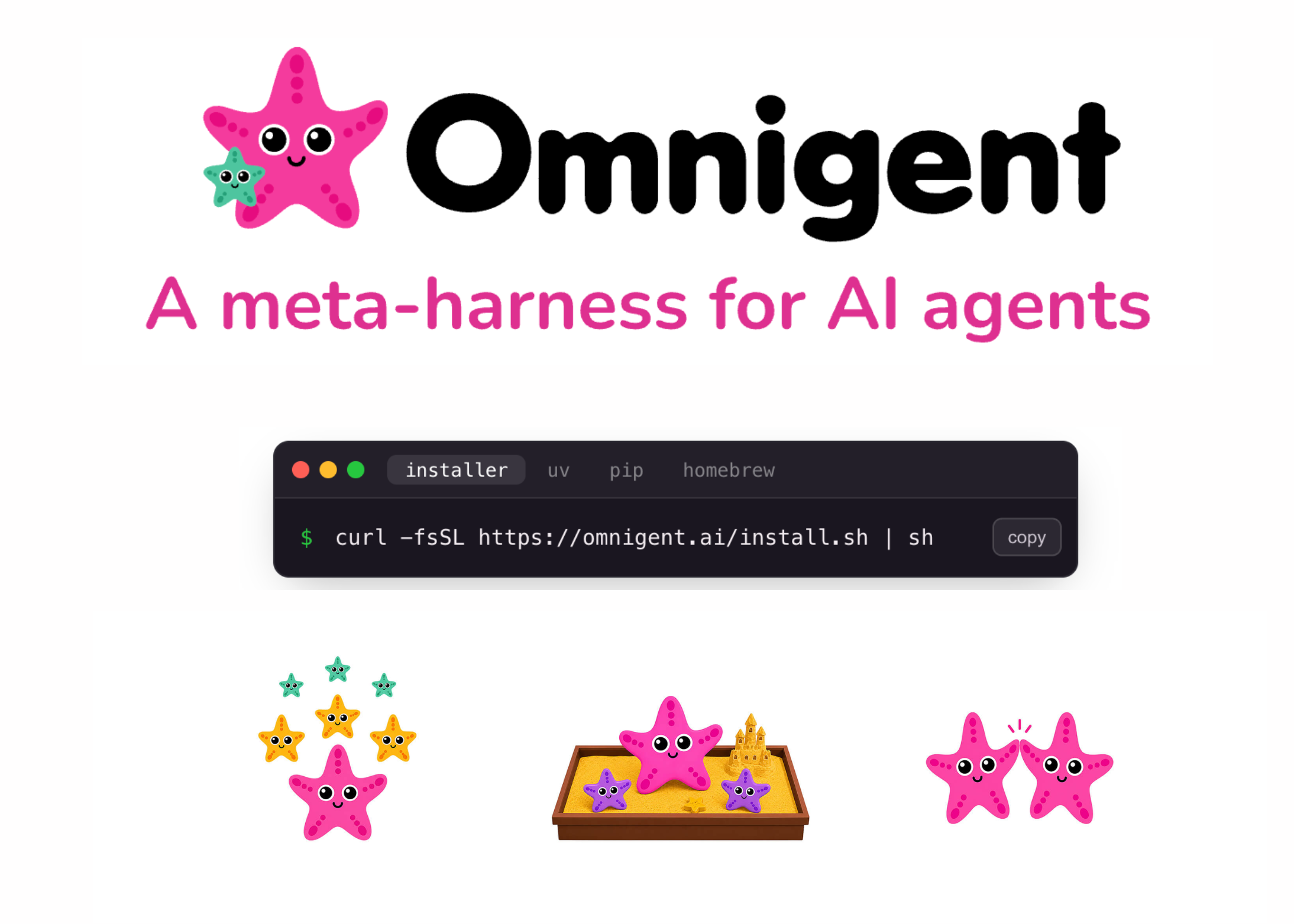
Databricks has open-sourced Omnigent, a meta-harness designed to work on top of multiple AI coding agents including Claude Code, Codex, and Pi. Omnigent provides a unified interface that supports composition of AI agents, governance through contextual policies, and session sharing. This interface works across terminal, web, desktop, and mobile environments. The project is available under the Apache 2.0 license and is currently in alpha stage.
Why builders should care
Omnigent shifts how developers and operations teams interact with AI coding agents by consolidating their use into a single framework rather than dealing with each agent separately. This matters because it enables tighter control over how AI responses are generated and shared, improving compliance and collaboration. Having policies that govern AI output in real time reduces the risk of inconsistent or non-compliant code suggestions across different AI systems. Live session sharing lets teams review and troubleshoot AI-assisted coding more transparently in real time, which can accelerate debugging and knowledge transfer.
The practical takeaway
For engineers and teams relying on multiple AI coding assistants, Omnigent promises to lower friction by giving one platform to compose workflows involving different models. It cuts down the overhead required to maintain separated integrations and apply governance that aligns with company standards. This can speed up AI adoption in existing coding environments while managing risks. The cross-platform availability also means developers can operate consistently whether they are on laptops, servers, or mobile devices. However, as an alpha release, it is not yet ready for production-critical use and will need further stabilization.
What to watch next
The key areas to watch include how quickly Databricks advances Omnigent’s maturity and feature set, particularly around security, governance robustness, and user experience. Uptake by developers using diverse AI agents will show if there genuinely is demand for a meta-harness solving these pain points. Integration with Databricks’ broader data and AI ecosystem could also signal a bigger push at combining AI coding assistance with data engineering workloads. Finally, observing how the open-source community contributes and expands Omnigent’s capabilities will be important for its long-term viability and adaptability across AI models.
AI Quick Briefs Editorial Desk