Context Windows Are Not Memory: What AI Agent Developers Need to Understand
What changed
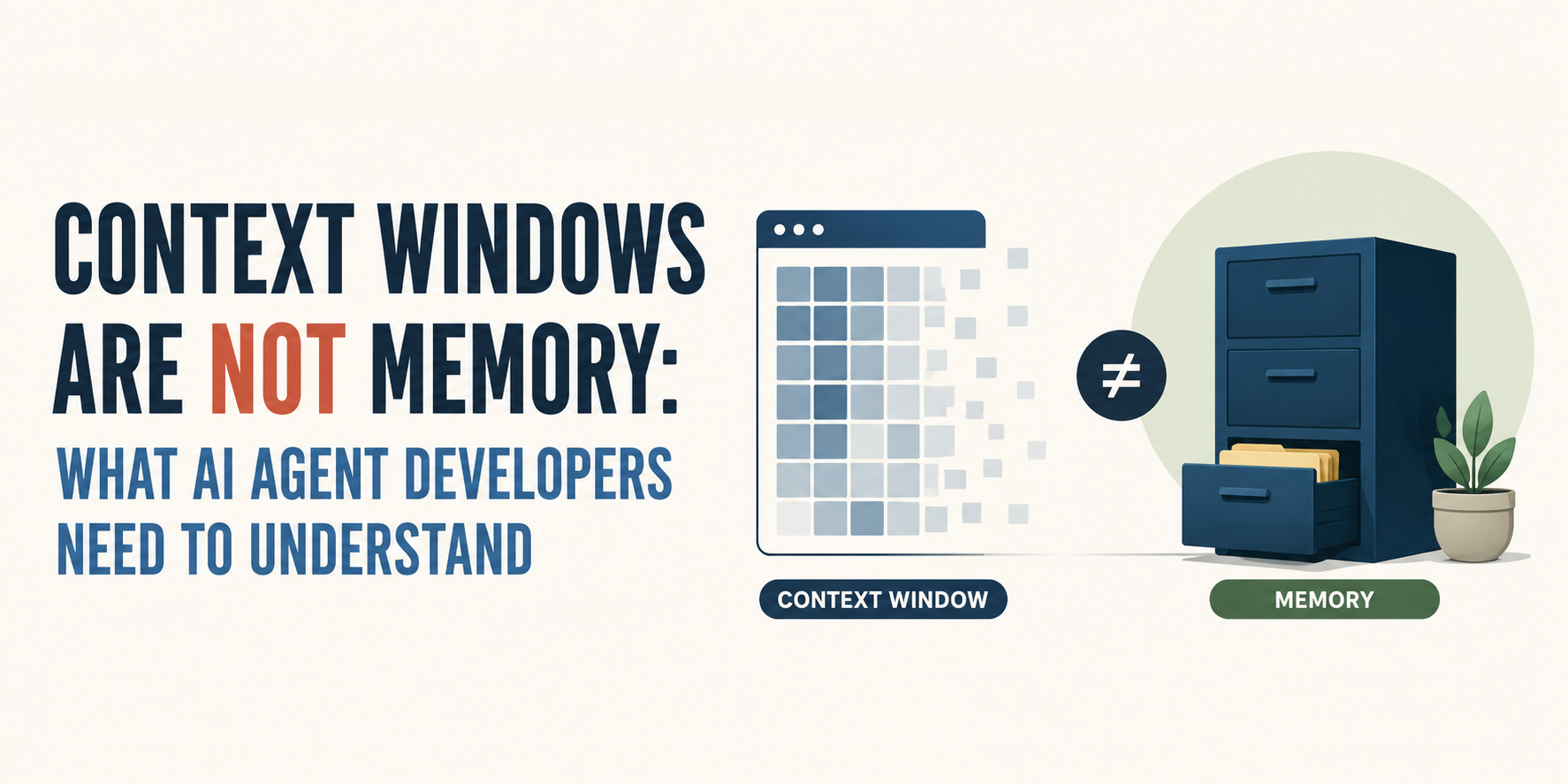
The common notion that a large context window equals a form of memory in AI agents is false. Context windows only hold the immediate input text the model can see at once, limiting how much information an AI can process directly. True memory requires methods outside this fixed window. Developers must combine retrieval, compression, or chunking techniques to simulate memory and maintain long-term context for AI agents.
Why builders should care
Assuming context windows act like memory leads to flawed agent design that struggles with tasks needing knowledge over extended interactions. Overreliance on large context windows without memory management causes expensive computations and unreliable outputs when needed information falls outside the visible window. Understanding the difference forces builders to plan how to store and recall knowledge efficiently rather than overload the input.
The practical takeaway
To build smarter agents, treat context windows as short-term working space, not storage. Use retrieval systems to pull relevant knowledge dynamically, or compress previous conversations to fit important details inside the window. These strategies reduce costs, improve response accuracy, and enable AI agents to handle complex workflows and maintain coherence over time without continuously expanding context windows.
What to watch next
Follow innovations in retrieval-augmented generation, dynamic compression techniques, and chunking strategies to enhance AI memory without ballooning costs. Deployments that combine these with mainstream large language models will define the next generation of capable AI agents able to operate over long, complex tasks reliably.
AI Quick Briefs Editorial Desk