Claude Code Guide 2026: 25 Features with Examples + Demo
What it does
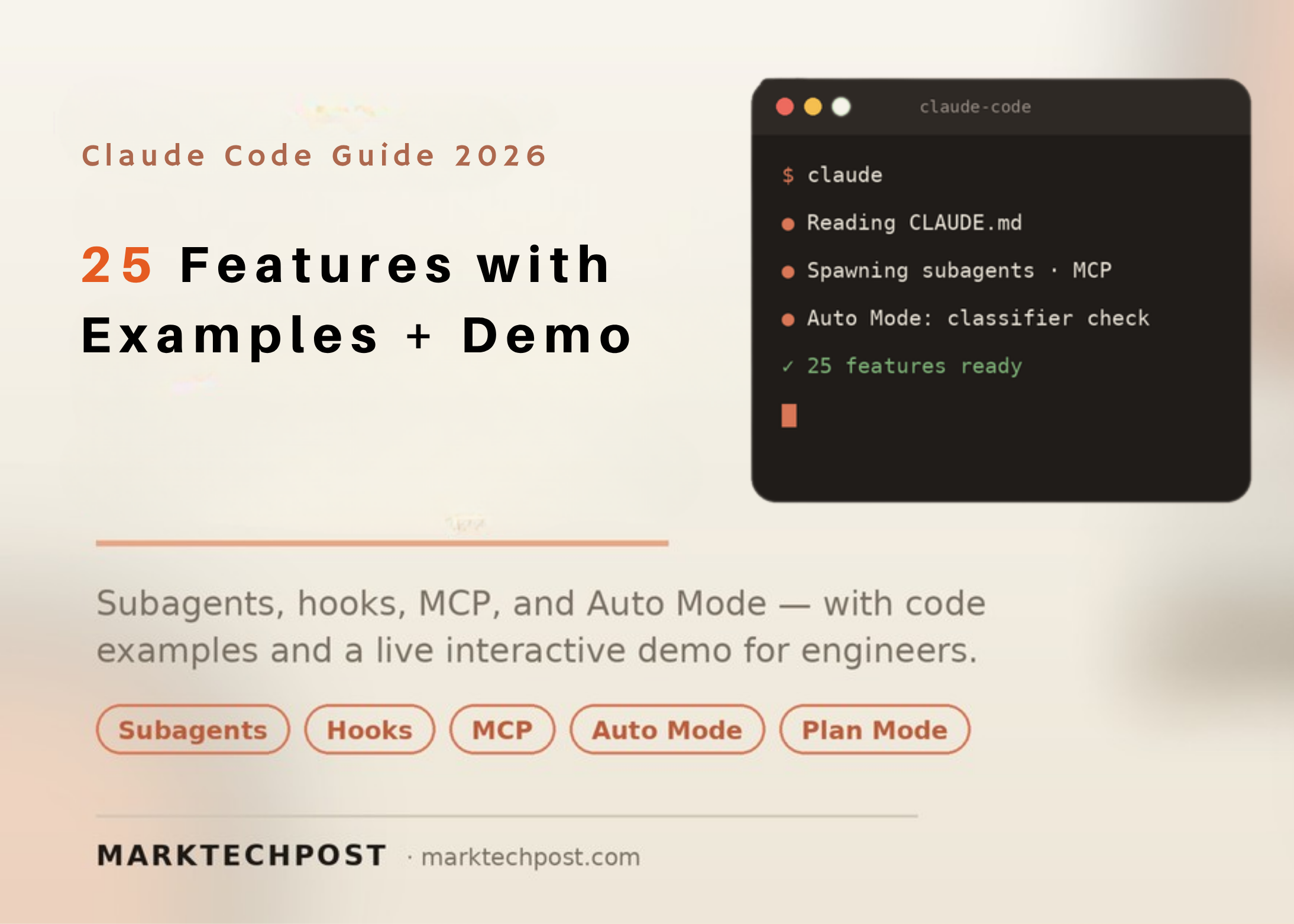
Claude Code is a layered, agent-based coding platform that goes beyond a simple chat prompt. It organizes coding workflows into distinct components like CLAUDE.md files, skills, subagents, and hooks. The system supports complex behaviors through mechanisms such as MCP (Multi-Channel Process) and Auto Mode, enabling autonomous or semi-autonomous coding agents. The 2026 guide breaks down 25 features and includes practical code samples, real user scenarios, and an interactive demo for hands-on experience.
Why it matters
Claude Code shifts how builders approach AI-assisted coding by structuring workflows into reusable, composable parts rather than treating AI as a single, reactive chatbot. This layered agent model encourages automation across multiple tasks and stages while maintaining traceability through hooks and documentation files. For teams and solo developers, this means faster prototyping, finer control over code behavior, and easier debugging. The hands-on examples and demo lower the barrier to adoption, making it easier to validate claims before investing time in integration.
Who it is for
Developers and founders aiming to integrate AI into coding pipelines will find Claude Code’s architecture useful. It fits well for those building multi-step, agent-driven applications or automations that require modular, stateful components. Operators managing AI-driven dev workflows will appreciate the balance between autonomy and manual override offered by features like Auto Mode and hooks. Investors in AI developer tools should note its focus on workflow composability as a potential differentiator in a crowded tooling market.
The catch
Claude Code’s modular complexity requires a learning curve, especially for teams unfamiliar with layered agent designs. Users must grasp multiple interlinked mechanisms to realize full benefits, which could slow adoption relative to simpler prompt-based tools. The system also depends on underlying AI model capabilities and stable integration layers, meaning real-world scaling could hit limits if those components falter. The guide’s detailed examples help but do not eliminate the inherent complexity in orchestrating multi-agent interactions.
What to watch next
Monitor how the Claude Code ecosystem grows around community-contributed skills and subagents. Adoption will hinge on whether builders create valuable extensions and integrate smoothly with existing CI/CD pipelines. Look for improvements in tooling that reduce complexity or offer visual orchestration interfaces. Adoption signals from early enterprise users could pressure competitors to deliver similarly composable AI coding systems. The interactive demo will likely evolve, showing practical, real-world use cases that test robustness and flexibility.
AI Quick Briefs Editorial Desk