China’s humanoid robot boom faces reality check as 150 companies chase a market where only 23% of buyers ar…
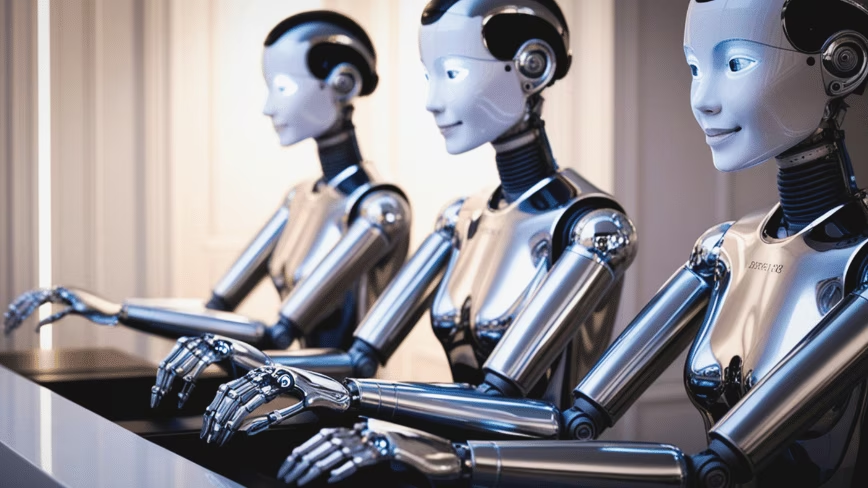
China’s humanoid robot industry is expanding rapidly, with over 150 companies competing in the market. In 2025, China accounted for approximately 90 percent of global shipments of humanoid robots, with major players like Unitree and AgiBot preparing for public offerings expected to value them at around 13 billion dollars combined. Morgan Stanley has even doubled its sales forecast for humanoid robots in China this year, reflecting optimistic expectations for market growth.
This boom in humanoid robots is significant because it could redefine automation and robotics deployment across many sectors in China and beyond. Businesses could automate complex physical tasks previously thought too difficult for robots, potentially improving productivity and efficiency. However, there is a reality check as only about 23 percent of current buyers report satisfaction, suggesting that the technology and user experience are still struggling to meet market needs. Widespread commercial acceptance and scalability might take time, and companies will need to improve hardware, software, and application integration substantially before humanoid robots become mainstream tools.
This surge in humanoid robotics builds on China’s larger push to lead in advanced AI and robotics globally. The country’s government and private sectors have invested heavily in robotic research and development to solve labor shortages and raise manufacturing capabilities. Humanoid robots aim to replicate human abilities, like walking, grasping, and interacting naturally, which makes them much more versatile than traditional fixed or industrial robots. The challenge is navigating the complexity of designing machines that can act safely and effectively in unstructured environments.
The current situation suggests the humanoid robot market is at a crossroads. Many companies are racing to develop and commercialize products, but the gap between expectations and reality means some may fail. Buyers’ dissatisfaction highlights that these robots still face limitations in cost, performance, and reliability. Watching which firms succeed in enhancing robot capabilities and scaling production will be crucial. The IPO moves by Unitree and AgiBot indicate investor confidence, but the path to widespread adoption likely requires overcoming technical hurdles and proving clear value to users.
Humanoid robots have the potential to transform many industries but only if the technology matures enough to deliver consistent results. Key developments to monitor include improvements in robot interaction, autonomy, and task flexibility. How China addresses feedback from early customers will be vital for driving innovation and trust in the technology. This moment reflects the broader challenges of integrating AI-driven robotics into everyday commercial use.
— AI Quick Briefs Editorial Desk