ByteDance is Microsoft’s biggest AI customer, even as Washington treats Chinese AI as a threat
The business move
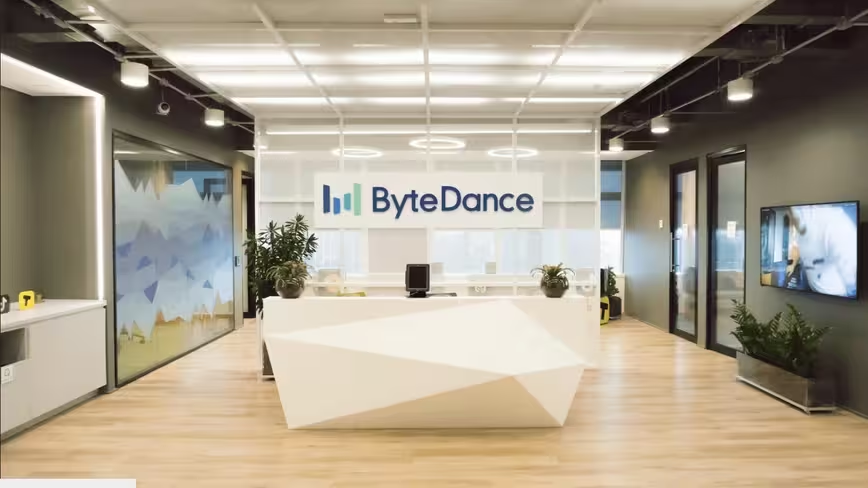
ByteDance, TikTok’s parent company, has become Microsoft’s largest AI customer, set to spend over $1 billion annually on Microsoft’s AI and cloud services. Most of this spending goes toward access to OpenAI’s models, offered through Microsoft’s Azure cloud platform. This means ByteDance relies heavily on U.S.-hosted AI infrastructure and technology to power its AI capabilities.
Why it matters
This relationship exposes tension in how AI leadership and cloud computing power are distributed globally. Despite rising U.S. concerns about Chinese AI companies posing potential risks, ByteDance is deeply integrated into the U.S. AI ecosystem. This dynamic pressures governments and enterprises to reassess trade, technology control, and supply chain security policies around AI services. For cloud providers like Microsoft, it shows the lucrative scale and influence of Chinese AI customers, even amid geopolitical strains.
Who gains and who gets squeezed
Microsoft gains a high-value, steady AI and cloud services revenue stream from one of China’s most prominent tech companies. This strengthens Microsoft’s position as a dominant AI infrastructure provider worldwide. ByteDance gains advanced AI capabilities without the need to develop them entirely in-house, accelerating its product innovation and content recommendation power.
On the other hand, U.S. policymakers and rivals in the AI and cloud markets face a tougher challenge enforcing restrictions or controls on Chinese firms without disrupting critical technology partnerships. Competitors to Microsoft lose by comparison because Azure’s channel for OpenAI models becomes a critical dependency for major Chinese companies like ByteDance.
What to watch next
Watch for how U.S. regulators might tighten oversight or impose restrictions on AI technology exports or cloud contracts involving Chinese companies. Any moves could raise costs or slow innovation cycles for both Microsoft and ByteDance. Also monitor whether ByteDance or other Chinese firms start investing more heavily in domestic AI cloud alternatives to reduce reliance on U.S. platforms in response to political pressure.
For investors and operators, this deal signals where money and power are flowing in AI infrastructure. The deep integration suggests Microsoft’s Azure OpenAI stack will remain central to major AI deployments globally, even amid geopolitical challenges.
AI Quick Briefs Editorial Desk