Best Text-to-Speech TTS Models in 2026: A Benchmark-Based Comparison
What changed
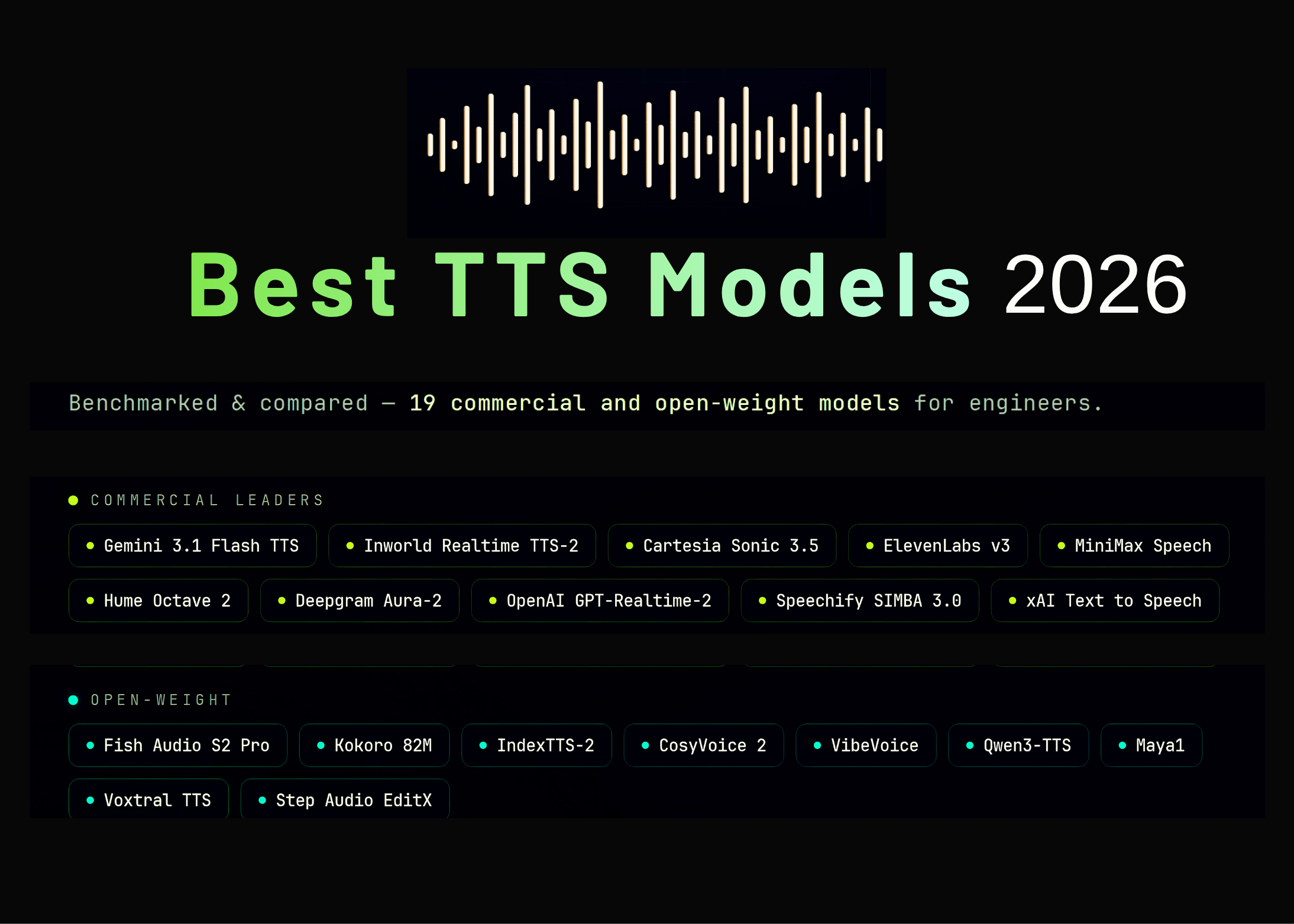
The text-to-speech (TTS) landscape has shifted rapidly in 2026, with new benchmarks establishing which models lead on quality, latency, cost, language support, and licensing terms. Both commercial and open-weight TTS models have been evaluated side-by-side, giving developers and businesses a clearer picture of which solutions deliver the best balance for specific needs. The latest tests expose sharp trade-offs between audio naturalness, processing speed, and budget impact, highlighting that no single model dominates every category.
Why builders should care
Choosing the right TTS model now means more than just picking the best voice. The 2026 benchmark comparison shows practical strengths and weaknesses that affect implementation costs, user experience, and global reach. Faster models reduce latency for real-time applications like voice assistants, while more cost-efficient options matter for scaled deployments. Open-weight models offer flexibility and fewer licensing headaches for startups and smaller teams, whereas commercial options often provide smoother integration and wider language coverage. Builders can match trade-offs to project goals rather than defaulting to popularity or surface-level performance claims.
The practical takeaway
This ranking doesn’t just list contenders; it arms operators with data to cut through hype. For example, if low latency is critical, some newer models outpace older giants. If your project targets multiple languages, checking license terms and language coverage upfront can prevent costly rewrites or legal risks. Also, cost per usage remains a key pressure point, especially as spoken AI services scale up. Operators who weigh the documented benchmarks against their product timeline and audience profile avoid overpaying or delivering subpar experiences.
What to watch next
The TTS field will continue evolving as training techniques and compute efficiencies improve. Watch for upcoming models that push closer to human-level fluency without raising costs or slowing response times. Another trend to monitor is license flexibility, as open-weight models gain traction against commercial incumbents. Keep an eye on how cloud providers integrate these models into APIs since pricing models and latency impact operational decisions directly. The next few quarters could reshape who controls the voice layer in conversational AI.
AI Quick Briefs Editorial Desk


