As AI Reshapes Global Energy Systems, Melbourne Leads Through Engineering Collaboration

What happened
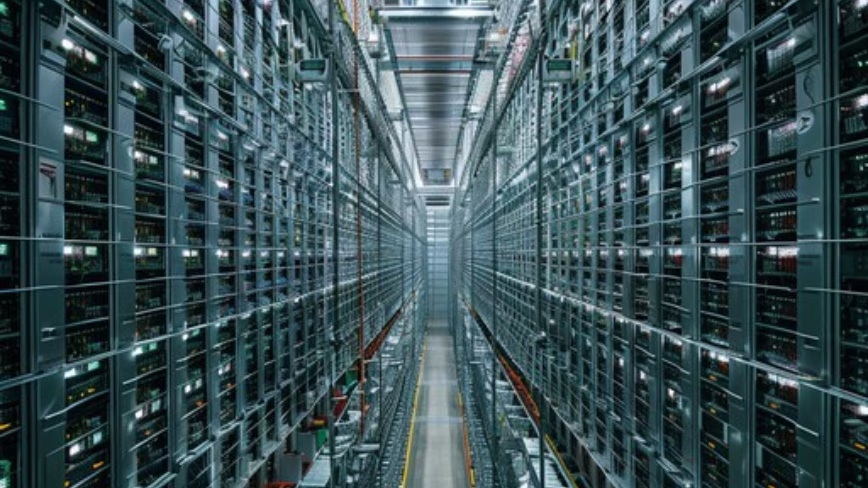
Melbourne has emerged as a hub for engineering collaboration tackling the energy demands driven by artificial intelligence. As AI workloads multiply globally, the electricity needed to power everything from hyperscale data centers to electrified industrial processes is surging. This strain has become a system-level problem requiring coordinated solutions that span energy generation, infrastructure planning, and engineering innovation. Melbourne’s convention and business agencies are promoting the city as a key node for this technical cooperation.
Why it matters
AI models consume massive amounts of compute, and compute requires energy. The rapid scaleup in AI adoption is not just increasing cloud costs but is tightening energy resources and pressuring electricity grids worldwide. This makes energy a critical constraint on AI growth. For operators, founders, and investors, understanding how energy limits or enables AI projects becomes essential. Melbourne’s cross-disciplinary approach highlights how integrating expertise from engineering and energy sectors can create scalable ways to handle AI’s power appetite while maintaining reliability and sustainability.
What to watch next
Expect Melbourne to serve as a testbed for new energy-efficient computing practices and infrastructure upgrades that optimize AI workloads. Watch for emerging partnerships between utilities, data center operators, and AI firms that balance power supply and demand through smarter grid management and engineering solutions. These innovations will reveal which tactics actually reduce costs and risks for AI deployments facing real-world energy constraints. Stakeholders should track policy, technology pilots, and market moves in this space as they will shape where and how AI can grow sustainably.
AI Quick Briefs Editorial Desk