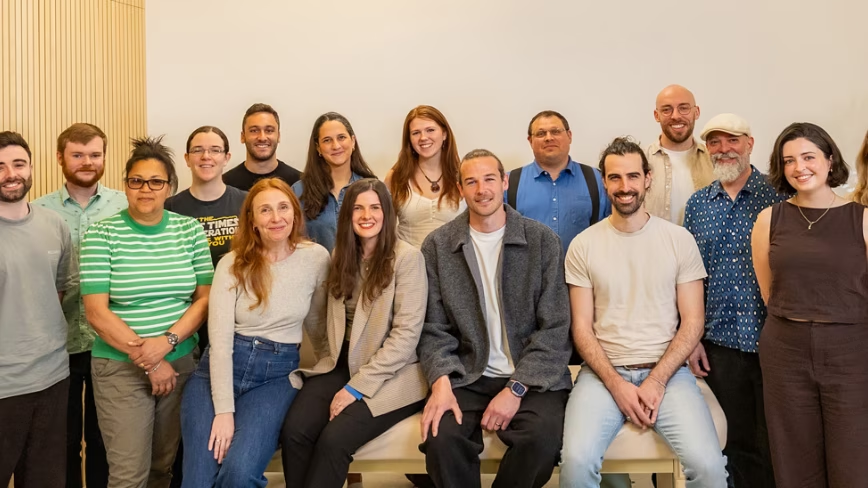
Apoha emerges from stealth with $36M to teach machines how matter behaves

What happened
Apoha, a stealth-stage startup, raised $36 million to develop AI that predicts how molecules behave in real-world conditions. Unlike existing science that identifies molecular structures, Apoha focuses on modeling interactions under messy, complex environments where behavior changes. This approach aims to reduce failures in drug trials and improve product development in industries like pharmaceuticals and food.
Why it matters
Current AI and simulation tools excel at identifying molecular composition but fall short at predicting real-world behavior under variable conditions. That gap causes costly failures when products don’t perform as expected outside controlled labs. Apoha’s funding reflects investor belief in the commercial value of better modeling these liquid and complex states. If successful, their technology could lower R&D costs, speed innovation cycles, and improve product reliability across sectors that depend on chemistry under physically dynamic conditions.
What to watch next
Track Apoha’s progress to see how practical and scalable their models become when applied beyond experimental labs. Adoption by pharmaceutical or food companies would signal a step toward more accurate, AI-driven material design and testing. Watch if this sparks competitive pressure on established simulation vendors to improve predictions of molecular behavior outside ideal scenarios. Also monitor how their technology integrates with existing AI workflows in drug discovery and materials science.
AI Quick Briefs Editorial Desk