Anthropic Releases Claude Security Plugin for Claude Code in Beta: A Multi-Agent Vulnerability Scanner That…
What it does
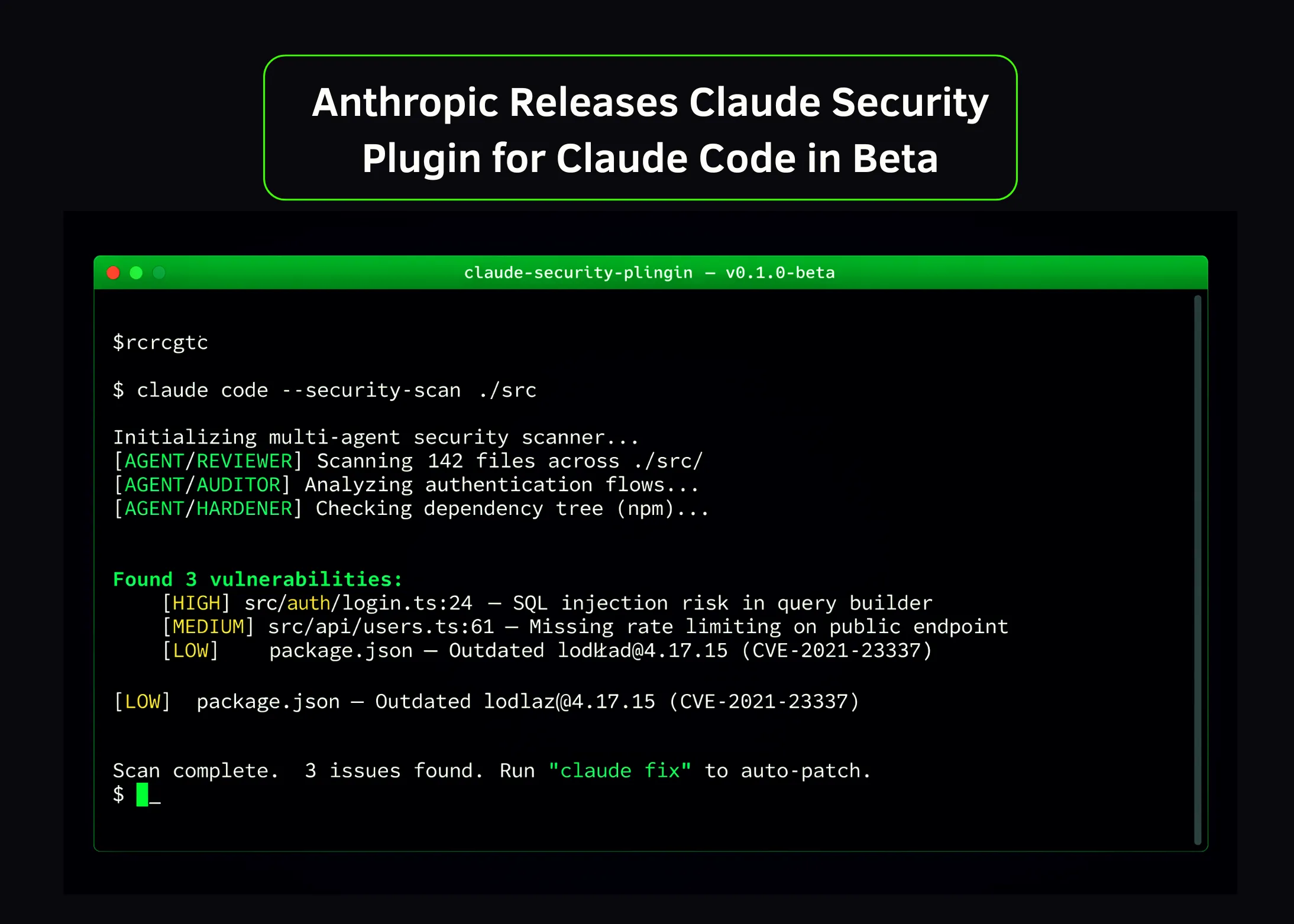
Anthropic launched the Claude Security plugin for Claude Code, currently in beta. This tool runs a multi-agent vulnerability scan directly inside a Claude Code session, allowing users to analyze a code repository without leaving their terminal environment. It identifies security issues through coordinated AI agents and turns chosen scan results into patch files. Users can manually review and apply these fixes, keeping control over code changes.
Why it matters
Security scanning in software development often introduces friction or requires switching tools. Embedding this process into Claude Code’s interface speeds up vulnerability detection and remediation. Teams can iterate on security patches faster, reducing the time exposure to known risks. Anthropic’s focus on a multi-agent system means the scanner can look at problems from different angles, improving coverage and detection accuracy compared to single-pass scans.
This integration pressures both traditional security tooling vendors and open-source scanner projects by delivering AI-powered analysis right in the code session streamlining developer workflows. It also shifts some control to operators by letting them pick which vulnerabilities to patch and review fixes manually, balancing automation with human oversight.
Who it is for
Developers and security engineers working with Claude Code will benefit most from this plugin. It suits teams that want quick, contextual vulnerability assessments inside their existing coding environment without juggling separate scanning tools. Early adopters can incorporate it into continuous development pipelines to catch security flaws before deploying changes.
The tool appeals to operators prioritizing code security but wary of fully automated patching. Its design supports hands-on correction instead of blind fixes, which suits organizations needing traceability and compliance around code changes.
The catch
Being in beta, the plugin may have limitations in defect coverage or stability. Users must manually review and approve patches, which means extra verification steps remain necessary to avoid introducing new issues. The effectiveness depends on the quality of the multi-agent analysis and how well it integrates with the specific codebases and frameworks.
There is also a technical dependency on running within Claude Code sessions, so teams not using this environment cannot take advantage of the plugin directly yet. The commercial and support model is unclear at this stage.
What to watch next
Tracking how widely developers adopt the Claude Security plugin will reveal if in-terminal AI security scanning gains traction over standalone tools. Anthropic’s updates will indicate how the multi-agent system matures and whether it expands coverage or introduces automatic patching options.
Look for integration announcements with CI/CD pipelines and support for more languages and frameworks. Also watch competitors’ responses as AI-infused vulnerability scanning becomes standard in developer tools.
AI Quick Briefs Editorial Desk