Alibaba’s Qwen Team Launches Qwen3.7-Plus, Adding Vision, Deep Reasoning, Tool Invocation, and Autonomous I…
What it does
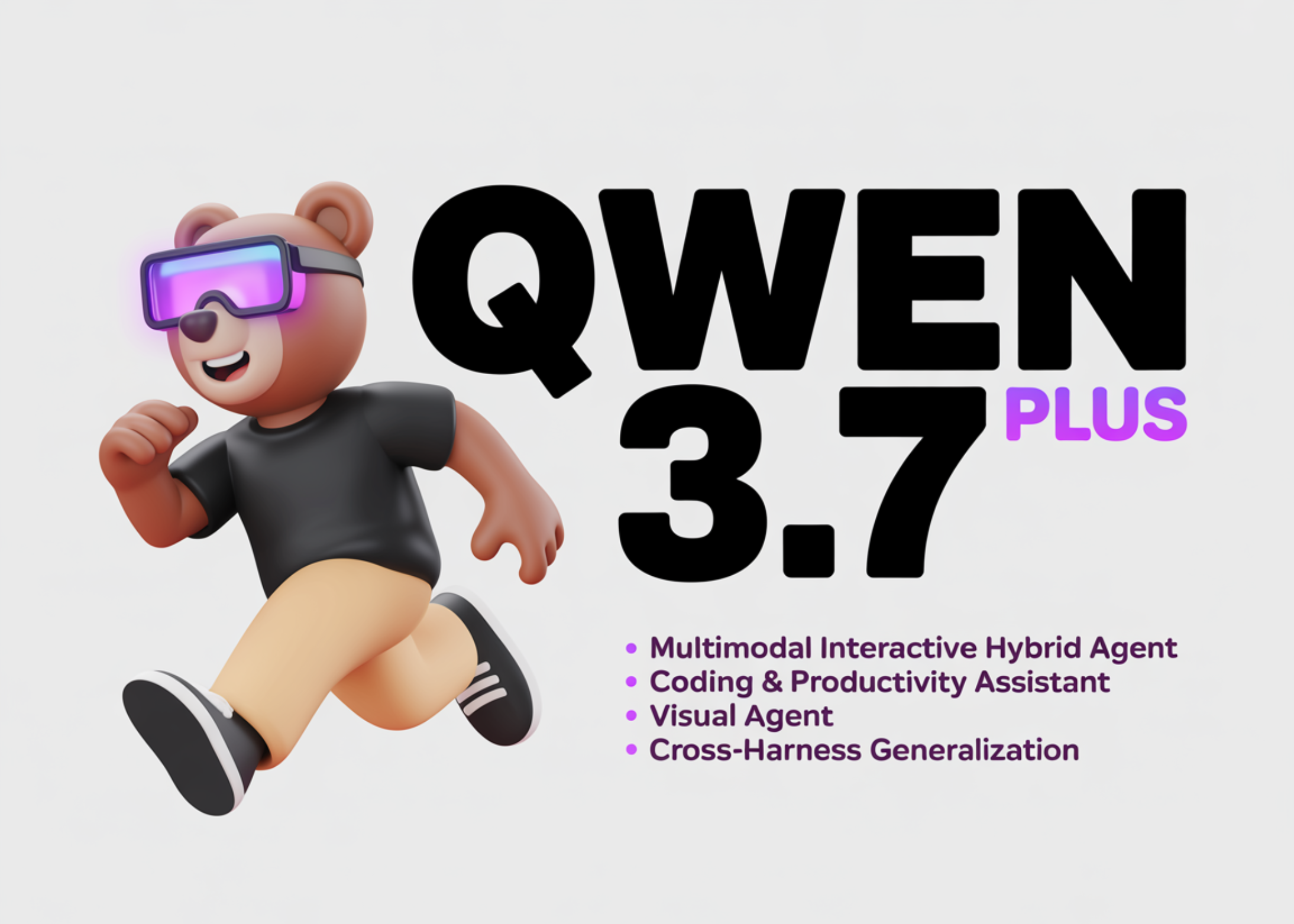
Alibaba’s Qwen team has launched Qwen3.7-Plus, a new multimodal AI agent model integrated on the Bailian platform. The model expands beyond text to understand images and video content, adding vision capabilities. It also incorporates deep reasoning skills, enabling it to process more complex and layered tasks. On top of that, Qwen3.7-Plus supports autonomous tool invocation and self-programming, meaning it can call external tools and update its own code without user prompts. This unlocks adaptive workflows that push AI closer to independent problem solving.
Why it matters
Qwen3.7-Plus tightens the gap between basic language models and operational AI assistants capable of real work. Vision understanding opens new use cases for industries like retail, security, and manufacturing where image and video analysis is critical. The tool invocation and autonomous iteration features move AI from passive response to active agent, reducing the manual overhead for developers or operators to connect AI outputs to external actions. This strengthens Alibaba’s position in enterprise AI and raises the bar for multimodal agents as practical automation tools, not just research demos.
Who it is for
Developers building multimodal applications will gain from the model’s extensibility and autonomy. Enterprises aiming to automate workflows that involve unstructured image/video data and tool-based action will find Qwen3.7-Plus useful for speeding deployments and cutting integration costs. Investors and partners focused on AI ecosystems should watch how Alibaba leverages Bailian as a testbed for commercial-grade agent intelligence that blends vision, reasoning, and self-driven tool usage.
The catch
While Qwen3.7-Plus adds promising features, the actual impact depends on how well its autonomous coding and tool invocation operate in noisy, real-world environments. Self-programming AI risks unintended consequences if controls are weak. Vision-based models require significant data quality and diversity to avoid bias or blind spots. Deployment will likely need cautious, human-in-the-loop oversight before fully trusting the agent in critical workflows.
What to watch next
The next developments to monitor are real-world use cases and pilot deployments on Bailian, particularly in retail or industrial sectors. Watch how Alibaba manages safety, error correction, and trust around autonomous tool invocation and iterative coding. Competitors in multimodal agents will also respond, so observe how Qwen3.7-Plus influences the evolving standards for operational AI autonomy and multimodal integration.
AI Quick Briefs Editorial Desk