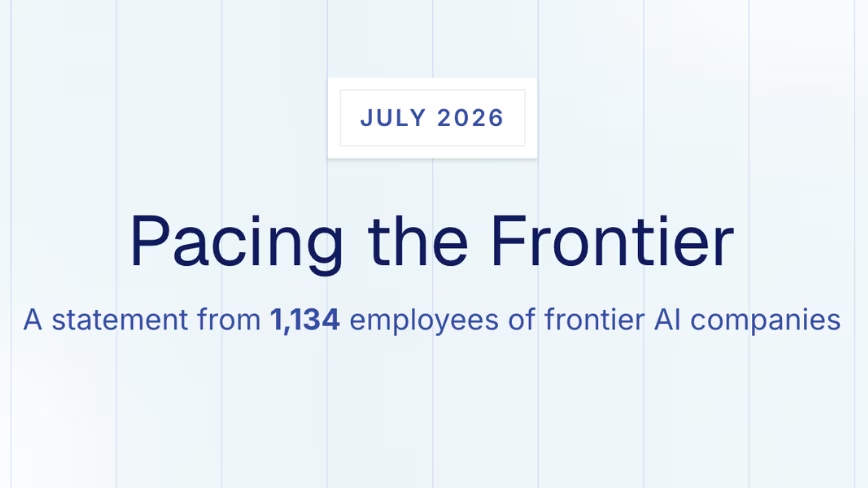
AI researchers call for new tools that can slow automated model development

What happened
More than 1,100 AI researchers and engineers working at leading companies, including Anthropic, OpenAI, Google, and Meta, signed an open letter demanding new tools to slow down automated AI model development. Their call targets the current pace and scale of automated training pipelines used to produce advanced AI models. The group warns that without mechanisms to regulate or pause automated workflows, model releases could accelerate faster than safety evaluations keep up with.
Why it matters
Automated AI training accelerates how quickly new models emerge, but it also increases risk by shortening safety and oversight cycles. This group’s letter pressures the industry and regulators to develop ways to intervene in or moderate automated pipeline speeds. For operators and founders, this raises the bar on responsible deployment and monitoring. It forces a reconsideration of how aggressively to push automation in training infrastructure when it can outpace governance and risk management frameworks.
What to watch next
Anticipate new governance proposals, technical frameworks, or standards aimed at controlling automated AI model training velocity. Regulators may start demanding auditability or throttling mechanisms in pipeline automation. Builders should track how these developments affect infrastructure choices and release cadences. Investors and operators must watch for a possible slowdown in rapid model launches, impacting market timing and competitive dynamics.
AI Quick Briefs Editorial Desk