AI Agent Tool Design: What Works and What Doesn’t
What changed
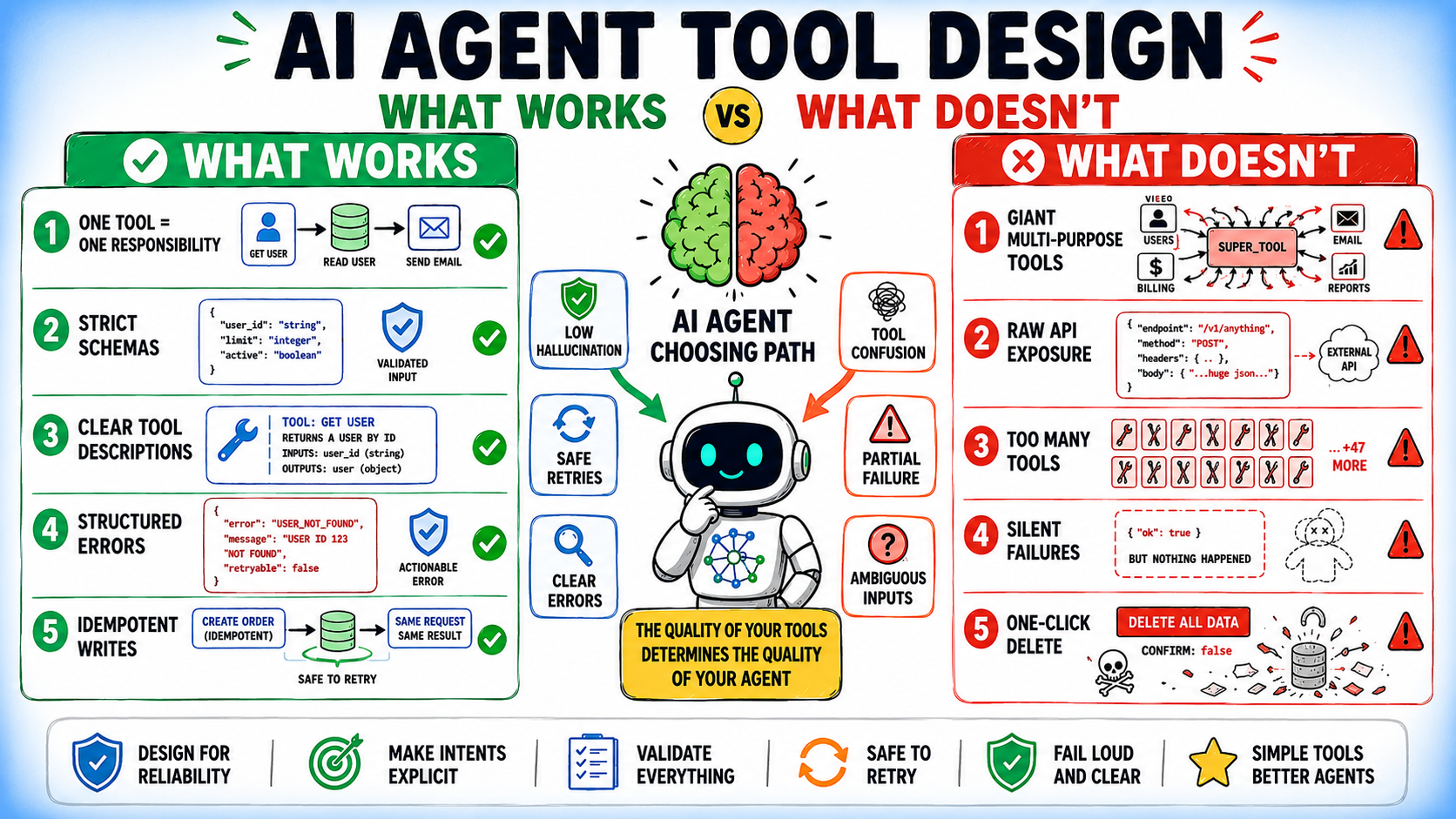
Recent insights into AI agent tool design reveal clear patterns about what works and what does not in practical AI deployment. Tool-using AI agents outperform simpler prompt-only agents when structured correctly. However, not all tool integrations improve outcomes. The key is in the agent design, such as how tools are selected, invoked, and integrated with language models.
Why builders should care
For developers and AI product builders, understanding these patterns is critical to avoid wasted effort or degraded performance. Ad-hoc or poorly designed tool use can confuse the AI, lead to errors, or create brittle systems. Well-designed agents reduce those risks by managing tool calls effectively, balancing when to rely on native language model capabilities versus external APIs. This knowledge pressures builders to invest upfront in proper tool orchestration instead of layering tools indiscriminately.
The practical takeaway
Focus on clearly defined agent architectures that explicitly govern tool usage. This includes rigorous context management and error handling within agent workflows. Builders should prioritize modular designs where the language model triggers tools only when necessary, avoiding redundant or irrelevant external calls. These approaches raise system reliability and reduce operational costs caused by unnecessary processing or failed responses.
What to watch next
Expect more nuanced frameworks and middleware that guide tool-use in AI agents, adding guardrails and analytics to track effectiveness. Tool developers that offer tight integration guidelines combined with API reliability guarantees will gain an edge. Operators should monitor emerging best practices that emphasize simplicity and intentionality over feature piling in agent-based AI tools.
AI Quick Briefs Editorial Desk