Agentic Workflow vs. Autonomous Agent: What’s the Difference?
Quick take
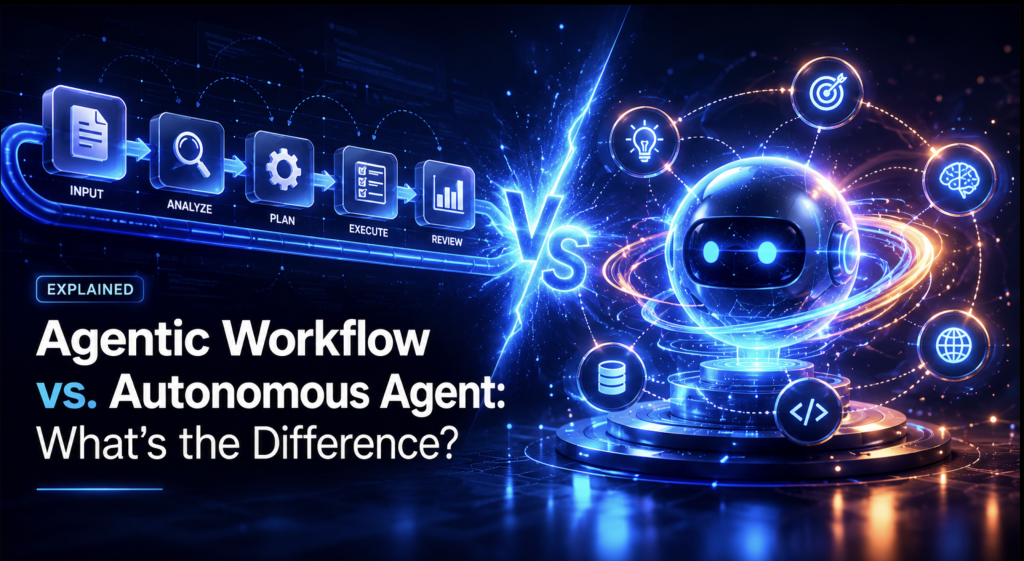
Agentic workflows and autonomous agents sound similar but differ in a key practical way: control flow. Agentic workflows require a human to design and control the sequence of tasks, deciding when and how to hand off between AI components. Autonomous agents, by contrast, manage their own control flow independently, making decisions on what steps to take next without direct human intervention.
Why it matters
Knowing who controls the process is crucial for builders and operators deciding how much automation they want and where to place oversight. Agentic workflows keep humans firmly in the driver’s seat, making them better suited for use cases demanding transparency and predictable control. Autonomous agents offer more scalability and hands-off operation but raise complexity and risks because they make decisions on the fly. That changes the trust model and operational impact, especially in sensitive or regulated environments.
This distinction affects design choices across AI applications. If a startup or enterprise needs to balance automation speed with compliance or risk controls, agentic workflows let humans set guardrails explicitly. Autonomous agents can boost throughput but potentially increase errors or unexpected outcomes without constant monitoring. Choosing the right approach impacts cost, control, and confidence in AI-driven processes.
AI Quick Briefs Editorial Desk