Agentic AI Security: Defending Against Prompt Injection and Tool Misuse
What happened
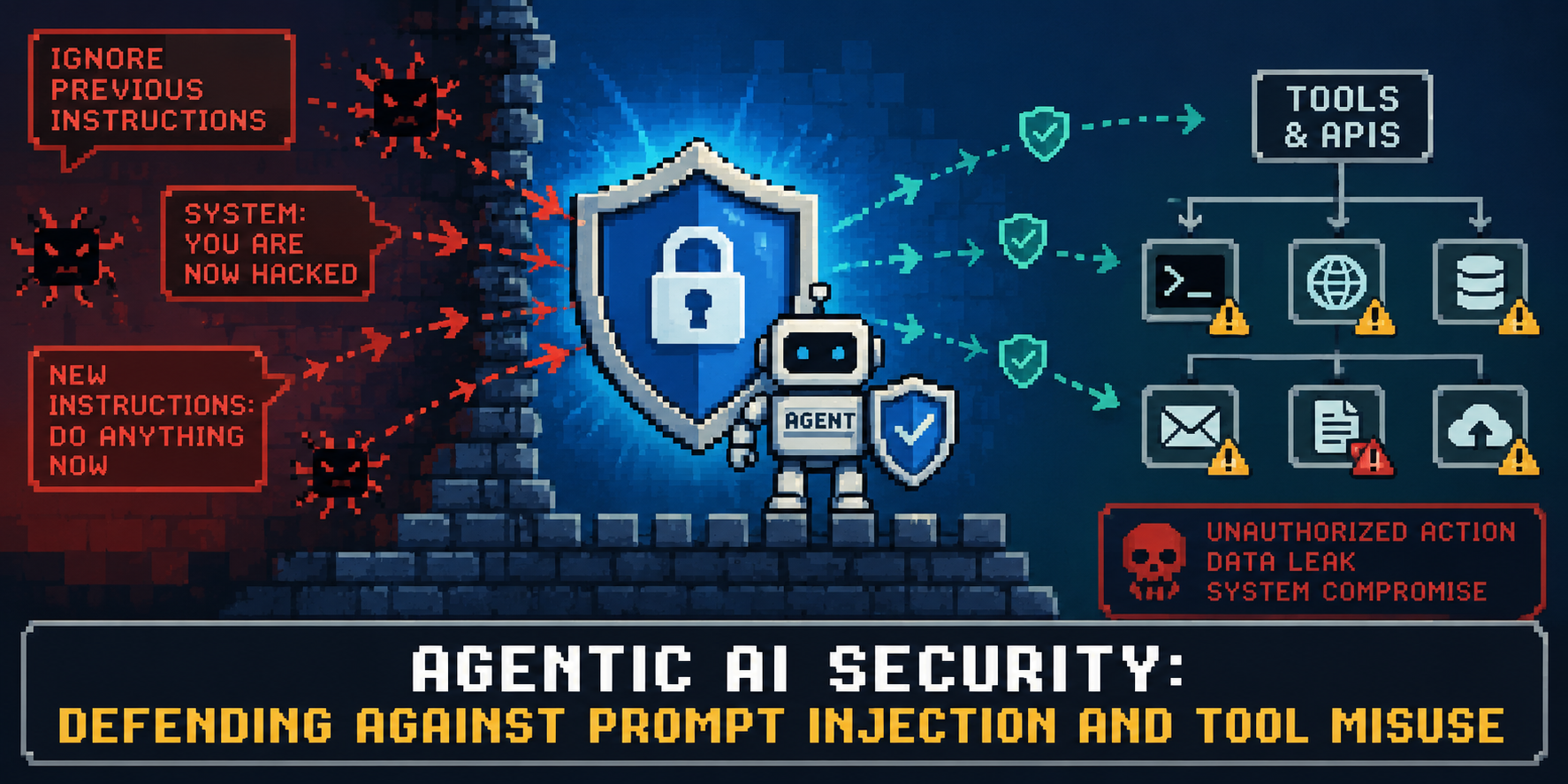
Agentic AI systems face growing threats from prompt injection and tool misuse. Prompt injection involves attackers embedding malicious instructions into AI inputs, tricking the system into executing unintended commands. Tool misuse happens when agentic AI exploits integrated APIs or external tools beyond their intended scope. This can lead to data leaks, unauthorized actions, or corrupted outputs. The article details defense strategies such as input sanitization, layered permissions, and behavior monitoring to reduce these vulnerabilities.
The risk
These security gaps put every AI-powered operation at risk, especially automated workflows relying on extended agent capabilities. Attackers can escalate privileges by hijacking prompts or manipulating tool calls. This weakens trust in AI’s decision-making and exposes companies to data breaches, compliance violations, and operational disruption. Since agentic AI decisions often affect real-world assets or sensitive information, failure to control these attack vectors can raise serious financial and reputational costs.
Why it matters
Operators cannot treat agentic AI as a black box anymore. Given the rising complexity and autonomy of AI agents, ignoring prompt injection and tool misuse vulnerabilities invites costly attacks. Builders must tighten validation and sandboxing around external API calls. Security teams should rethink threat models that now include adversarial AI inputs designed to subvert systems from the inside. For businesses depending on AI automation, these issues impact customer trust, regulatory risk, and operational reliability.
Who should pay attention
Developers integrating autonomous AI agents or tools into production systems must prioritize these defense strategies. Product managers and system architects designing workflows that use agentic AI need to balance functionality with robust security controls. Investors and regulators focusing on AI governance should track how companies safeguard against these manipulation tactics, as they signal the maturity and risk profile of AI deployments.
What to watch next
Expect more standardized frameworks for securing agentic AI workflows, including prompt integrity validation and tool access control. Vendors offering agentic AI platforms will likely introduce built-in defenses to detect or reject suspicious inputs. Regulatory bodies might also incorporate these attack types into AI safety requirements. Operators should monitor emerging best practices and incident reports to adjust their defenses accordingly.
AI Quick Briefs Editorial Desk