A Chinese startup just dethroned Nvidia on the benchmark Nvidia helped build
What happened
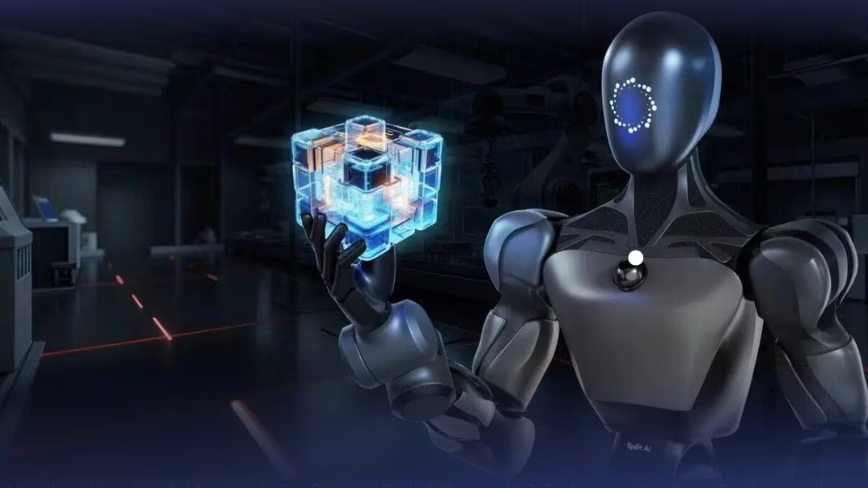
Spirit AI, a startup from Hangzhou, overtook Nvidia at the top of the RoboArena leaderboard just two days after Nvidia’s latest robotics model claimed the spot. Spirit AI’s foundation model for embodied intelligence, Spirit v1.6, scored 1,924 on the benchmark, narrowly beating Nvidia’s Cosmos3-Nano-Policy, which scored 1,881. Nvidia’s DreamZero project remains competitive but sits behind Spirit AI for now.
Why it matters
RoboArena is a benchmark specifically built to measure physical AI performance in robotic environments, and Nvidia helped design it. Spirit AI’s rapid leap past Nvidia shows that startups outside the U.S. are catching up and competing at the highest technical level in physical AI models. This pressures Nvidia’s robotics leadership, which has been considered dominant due to its early investments and expertise.
For builders and investors, this signals that innovation in embodied AI is becoming more distributed globally. It puts pressure on established incumbents like Nvidia to either accelerate their development cycle or risk losing ground to agile challengers. For companies betting on robotics and physical AI, this could affect which vendors or research partnerships provide the most advanced technology.
What to watch next
The next question is whether Spirit AI can translate this benchmark lead into real-world robotics applications and partnerships. Watch for announcements around licensing, integrations, or pilots with robotics manufacturers or automation firms. Nvidia is likely to respond with updates or improvements to Cosmos3-Nano-Policy or DreamZero, so tracking their performance in RoboArena and similar benchmarks will show if Spirit AI’s lead holds.
Also, note if other startups enter this benchmark race, as more players could accelerate innovation but also fragment the robotics AI ecosystem. Investors should monitor funding flows and technical releases tied to embodied intelligence to assess where value will cluster.
AI Quick Briefs Editorial Desk