A California city just approved $3.15 million in police drones that respond to 911 calls in 30 seconds
What happened
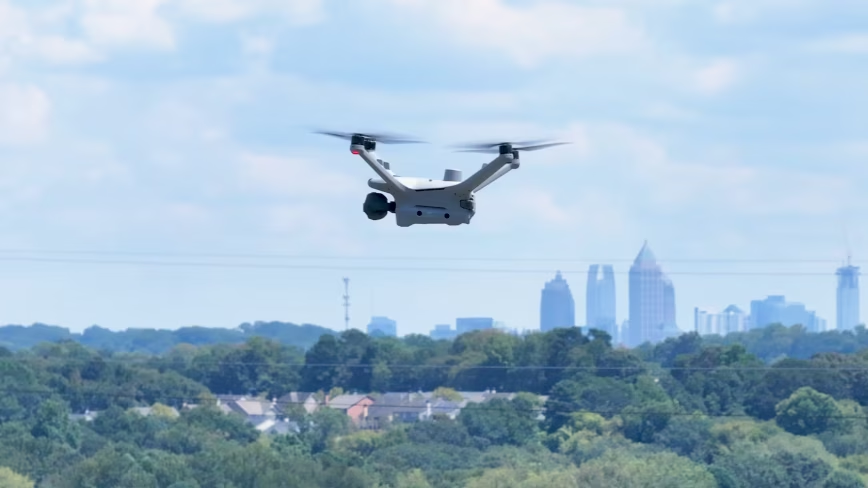
Stockton, California, approved a $3.15 million expansion for police drones that respond to 911 calls within 30 seconds. The city council unanimously voted to extend its contract with Flock Safety, integrating drones as a first-response tool alongside existing automatic license plate readers. This move raises the contract’s total value beyond $9 million and marks a shift in how Stockton deploys technology for public safety.
Why it matters
Deploying drones as rapid first responders accelerates law enforcement’s ability to assess incidents remotely before officers arrive. This can lower response times, reduce risks for police by providing real-time aerial surveillance, and potentially improve situational awareness during emergencies. For cities, it pressures traditional dispatch and patrol models to incorporate automated, AI-supported tools that extend reach without more personnel.
However, this also raises questions on privacy, cost efficiency, and over-reliance on automated surveillance. The drone-as-first-responder platform represents a step toward tech-driven policing that may shift power toward surveillance infrastructure, with implications for transparency and civil liberties. Stockton’s investment signals a growing willingness among mid-size cities to experiment with AI-enabled tactical tools in routine law enforcement.
What to watch next
Watch how Stockton integrates drone data operationally and how well drones can reliably connect to 911 dispatch workflows. Other municipalities will observe whether rapid aerial response actually improves outcomes or just adds costs. The balance between quicker response times and community concerns around surveillance will shape acceptance.
Also keep an eye on regulatory responses to police drone use, especially on privacy protections and data retention policies. The results may drive broader adoption or backlash, influencing how public safety agencies justify and govern AI-enhanced equipment budgets nationwide.
AI Quick Briefs Editorial Desk