Claude’s new voice mode isn’t chasing natural. It’s chasing your to-do list.
What it does
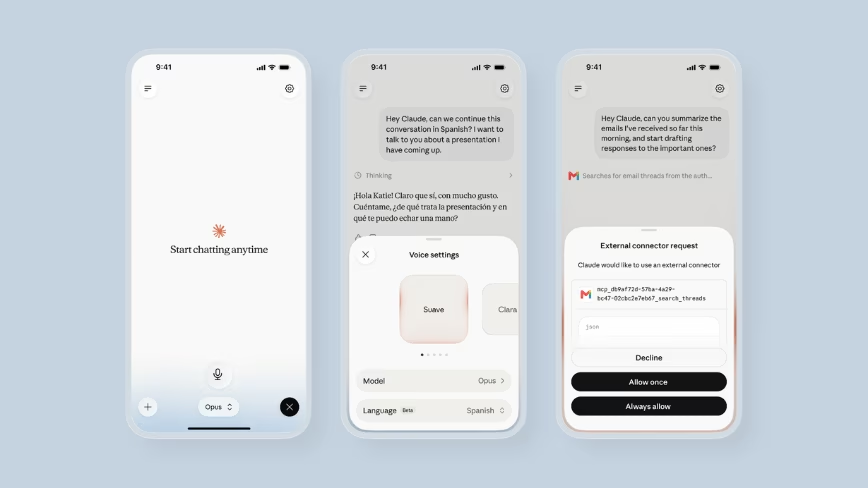
Anthropic upgraded Claude’s voice mode to work on its most powerful models, Opus and Sonnet, replacing the earlier use of Haiku, a faster but less capable model. Voice mode lets users talk to Claude and have it act on their requests in real time. The update aims less at mimicking natural speech and more at helping users manage tasks efficiently.
Why it matters
Shifting voice mode to more advanced models improves Claude’s ability to understand and execute complex commands, not just hold simple chats. This change pushes Claude beyond a voice chatbot and closer to a hands-free productivity assistant. For operators and businesses relying on voice interfaces, it means more reliable task handling, fewer errors, and better context retention.
Who it is for
Operators needing smarter voice-driven automation will find this upgrade useful. Builders designing voice-activated workflows, founders developing new voice-first products, and small teams looking to reduce friction in daily to-dos can benefit. This might also interest investors tracking voice AI moving from novelty into practical, time-saving tools.
The catch
Using more capable models could increase computational costs and latency compared to Haiku. That tradeoff matters for applications where speed or budget is tight. Also, the focus on task-oriented voice interaction limits conversations that aim to sound fully natural or human-like, which might disappoint users expecting a casual chat companion.
What to watch next
Keep an eye on how Anthropic integrates this voice mode with third-party apps and workflows since practical use depends on seamless task execution. Also watch if competitors respond by upgrading their voice assistants with deeper reasoning. Finally, note how user adoption evolves—higher power is only valuable if it delivers clear improvements in everyday productivity.
AI Quick Briefs Editorial Desk