Language Model Hallucination Evaluation with GraphEval
What changed
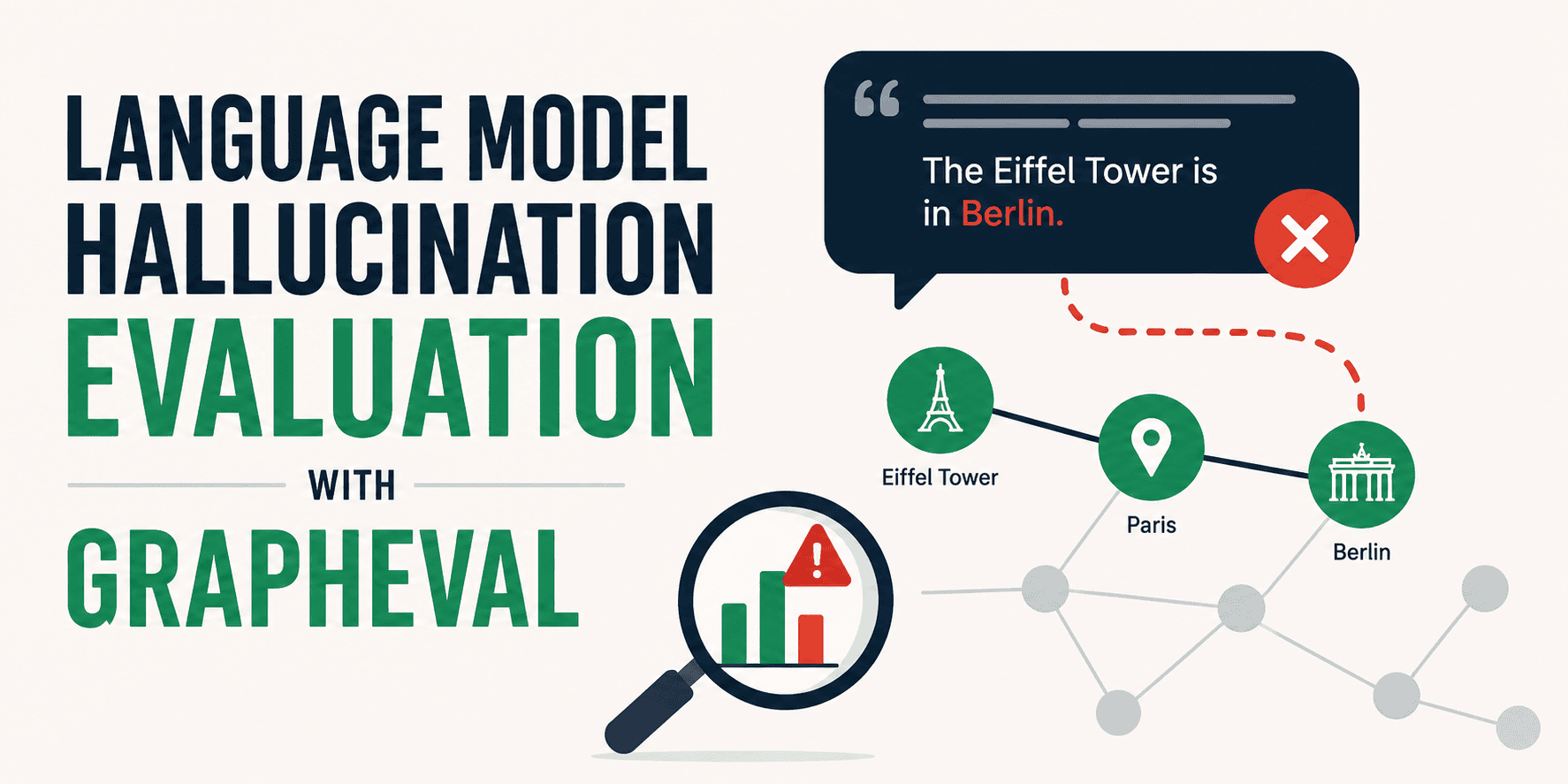
GraphEval proposes a new framework to evaluate hallucinations in large language models (LLMs) that moves beyond standard benchmark tests. It converts hallucination detection into a graph-based evaluation, representing both model-generated facts and reference knowledge as structured graphs. This method simulates a practical approach to comparing and scoring the factual accuracy of generated responses, making it possible to pinpoint which parts of an answer are unsupported or false.
Why builders should care
Hallucinations in LLMs risk eroding trust and usability in real-world applications. GraphEval’s graph-centric method gives operators and developers a tool to diagnose hallucination errors more granularly and systematically. By structuring content relationships, it clarifies not just if but how and where an LLM’s output diverges from reality. This precision can accelerate model tuning or downstream filtering, reducing misinformation risks in customer interactions, content pipelines, and compliance-sensitive environments.
The practical takeaway
GraphEval transforms hallucination evaluation from vague scoring into actionable insights. It reveals specific weaker points in model knowledge representation rather than lumping all errors into a single number. This supports targeted interventions for improving accuracy. For those deploying LLMs operationally, GraphEval offers a potentially more efficient way to track when hallucinations occur and understand their nature, which can significantly cut down iteration cycles and quality controls.
What to watch next
Look for GraphEval-style evaluation integrated into model development workflows, especially low-level diagnostics before deployment. Watch if LLM vendors adopt graph-structured factual assessment to benchmark hallucination mitigation techniques. Advances here could pressure model providers to offer more transparent accuracy metrics and improve model fine-tuning through clearer error signals. Applications coping with high-stakes output—like legal, medical, or financial sectors—will find this especially valuable as hallucination accountability tightens.
AI Quick Briefs Editorial Desk


