Open models recap: more on Kimi K3, Qwen 3.8, Xi’s WAIC speech, distillation, the open-closed gap, and what…
What changed
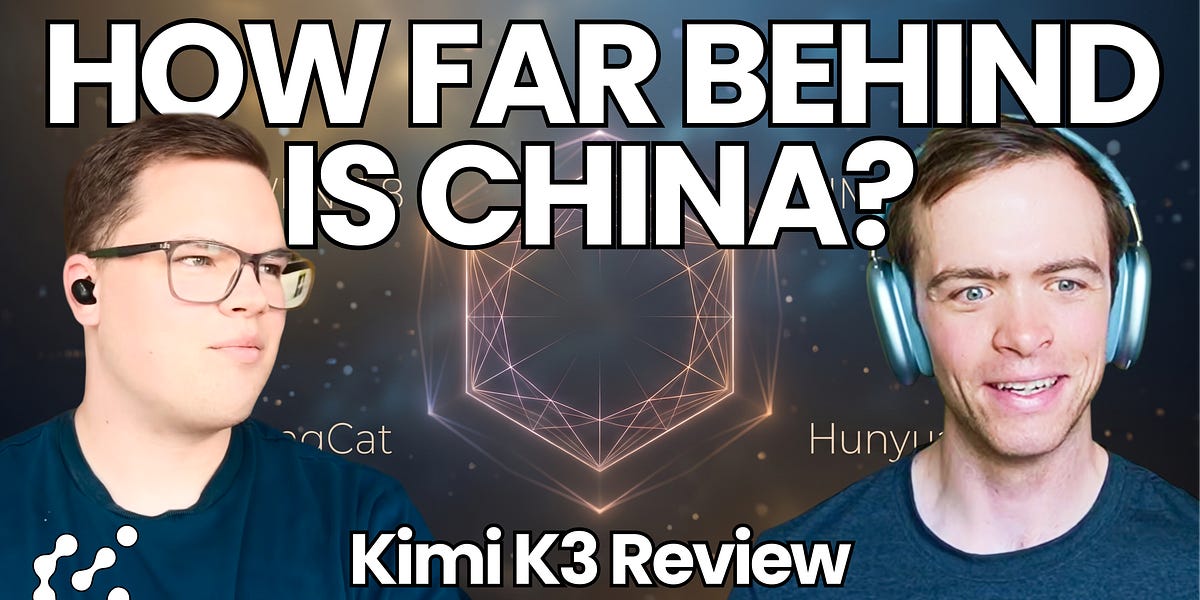
The latest podcast episode with Florian Brand covers key developments in the open AI model landscape, including updates on Kimi K3 and Qwen 3.8 models, insights from China’s Xi Jinping at WAIC, advances in model distillation, and the widening gap between open and closed AI systems. Kimi K3 and Qwen 3.8 represent the newest generation of open-source models pushing the performance frontier, while Xi’s speech signals China’s intent to accelerate AI innovation with national support. Distillation techniques are becoming a focus to optimize large models for more accessible use, and the divide between open and proprietary models continues to widen in both capability and ecosystem control.
Why builders should care
The Kimi K3 and Qwen 3.8 upgrades mean builders now have access to open models that can rival or outperform previous generations, pressuring proprietary providers to justify their premium. Xi’s WAIC speech highlights China’s push to own core AI infrastructure, which will influence talent, data access, and regulation globally. Advances in distillation point to more efficient models that reduce compute costs and enable embedding AI in resource-constrained settings, directly impacting deployment strategies. The growing open-closed gap is shifting power toward big closed players with data and compute scale, forcing builders to weigh openness and innovation speed against vendor lock-in and cost.
The practical takeaway
Builders looking to future-proof AI projects should monitor how open models like Kimi K3 and Qwen 3.8 evolve, particularly for customization and cost control. Investing time in distillation methods can yield leaner, faster models suited for on-device or edge deployment. At the same time, more enterprises will face pressure to integrate or compete with large proprietary platforms that offer superior scale and support but limit flexibility. Understanding the geopolitical and economic shifts spotlighted by Xi’s WAIC speech will help operators anticipate regulatory and market changes impacting partnerships and platform choices.
What to watch next
Watch closely how open model communities respond to the performance and efficiency benchmarks set by Kimi K3 and Qwen 3.8. Follow China’s AI policy and investment moves post-WAIC for changes in data access, talent flow, and international collaboration that could alter competitive dynamics. Track advances in distillation techniques as they become more reliable and automated, since they will influence cost and deployment strategies widely. Finally, observe whether the open-closed model gap narrows due to open-source innovation or widens as closed players refine proprietary advantages in data, compute, and integration.
AI Quick Briefs Editorial Desk