Samsung Health Assistant arrives in beta for US users
What it does
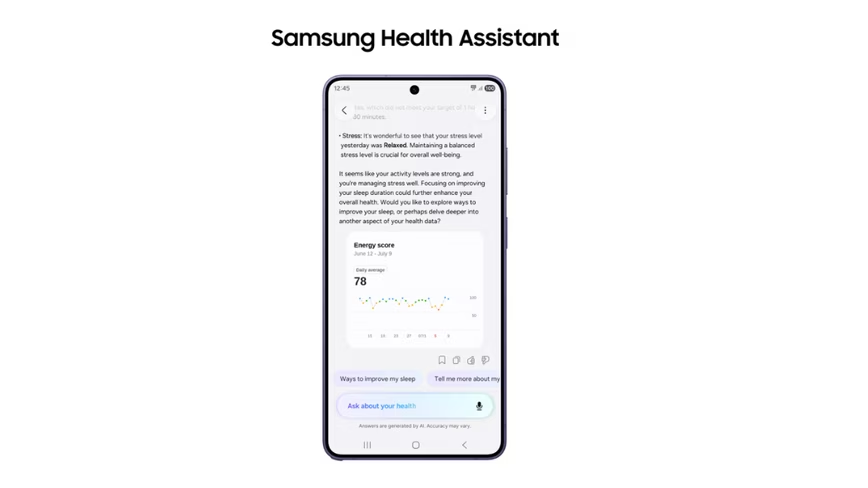
Samsung has rolled out a beta version of Samsung Health Assistant, an AI-powered personal health assistant integrated into the Samsung Health app. This feature is currently available only to select users in the United States. Samsung positions it as a tool that consolidates various health tracking and advice functions into one assistant powered by artificial intelligence.
Why it matters
Introducing an AI-driven assistant inside a widely used health app changes how users interact with their health data. Instead of manually tracking and interpreting metrics, the assistant promises to offer timely insights and personalized guidance. This shifts some health management tasks from users or external services directly into Samsung’s ecosystem, potentially increasing engagement and reliance on Samsung’s health platform.
For operators and businesses, it pressures competitors in the health app space to integrate AI features to remain relevant. It also raises expectations around data privacy and security given the sensitive nature of health information handled by AI. For users, this means more convenience but also a need to assess trust and accuracy in AI recommendations.
Who it is for
The assistant targets Samsung Health users who want more than data tracking and are open to AI-driven personalized health support. It aims at consumers seeking proactive health advice and streamlined wellness management without switching across multiple apps or services.
The catch
Samsung has not announced a timeline for broader availability outside the current US beta user group, limiting immediate impact. The effectiveness of the AI assistant will depend heavily on the quality of its advice and how well it protects user data. Users and operators should watch for how Samsung balances convenience and privacy, and how it integrates medical accuracy into AI interactions.
What to watch next
Look for signs of how Samsung plans to scale this assistant beyond beta and whether it will add features like integration with external health devices or professional medical services. Regulatory scrutiny over AI in health apps could also influence its development path. Other tech players may accelerate their AI health integrations in response, making this a space worth monitoring for shifting competitive dynamics.
AI Quick Briefs Editorial Desk


