Anduril and Archer unveiled an autonomous attack rotorcraft built on air taxi technology. First flight is p…
What happened
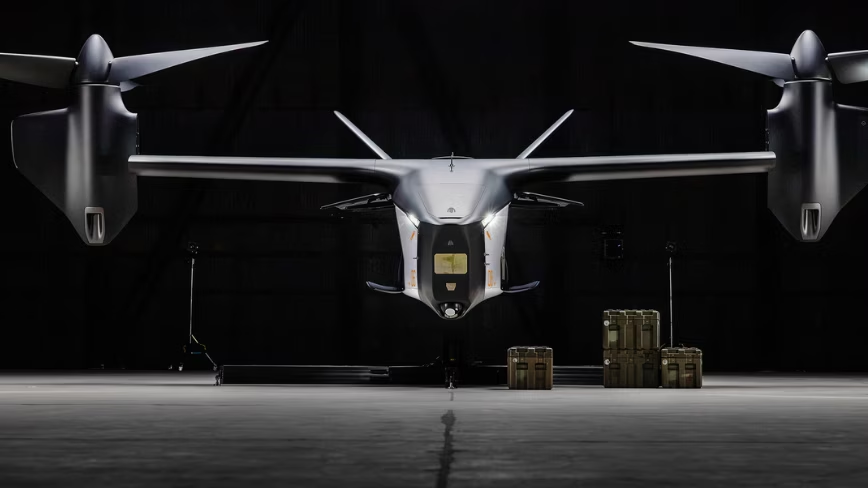
Anduril and Archer Aviation revealed Thunder, an autonomous attack rotorcraft, at the Farnborough International Airshow. Thunder is a Group 5 unmanned aerial vehicle designed to operate alongside crewed attack and assault helicopters, expanding their combat capabilities without requiring a pilot. It features a series hybrid-electric powertrain and is built on an air taxi technology platform developed jointly by the two companies. The first flight is scheduled for 2027.
Why it matters
Thunder represents a shift in military aviation, blending commercial air taxi innovation with unmanned combat applications. By using an electric hybrid propulsion system, the rotorcraft aims to reduce fuel consumption and potentially lower maintenance costs compared to traditional attack helicopters. Its autonomous design promises to multiply frontline combat power by allowing manned aircraft to coordinate with unmanned partners, reducing risk to pilots in contested areas. This move pressures defense operators to rethink force composition as unmanned systems take on more aggressive roles. Investors and defense contractors should watch for the impact on helicopter manufacturing and battlefield strategy as hybrid-electric VTOL may change operational costs and engagement tactics.
What to watch next
The progress toward Thunder’s first flight in 2027 will be a critical indicator of how quickly hybrid-electric attack rotorcraft can mature beyond concept. Watch for signs of government contracts or partnerships that could accelerate deployment and scale production. Regulatory moves around autonomous weapon systems and hybrid-electric aircraft certification will also influence potential adoption. Competition from legacy helicopter makers and emerging unmanned combat drones will test if Thunder’s dual-use technology offers a sustainable edge or faces adoption hurdles. How Anduril and Archer address endurance, payload, and autonomy reliability will define its practical viability for frontline operators.
AI Quick Briefs Editorial Desk


