Uber lost the self-driving race. Now it wants to write the rules
The business move
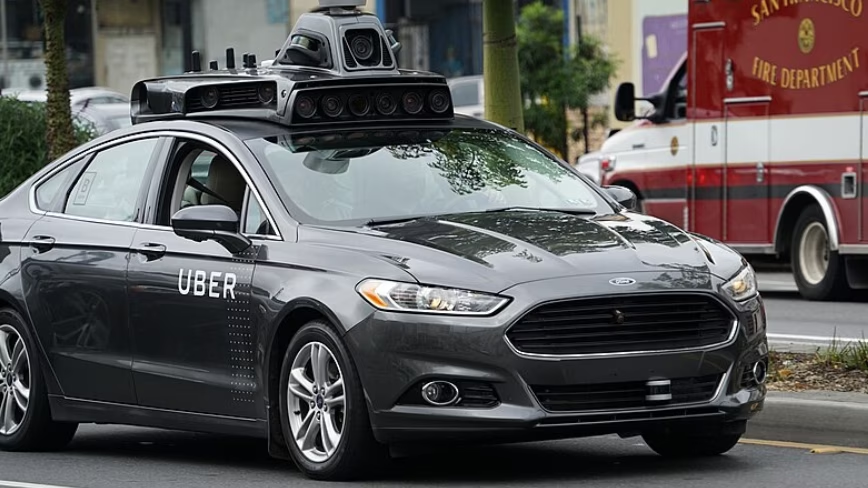
Uber lost out in the race to build fully autonomous self-driving cars but is shifting tactics. Instead of owning the robotaxi hardware and software, Uber is lobbying state governments in the US to require that all robotaxis, including competitors’, be listed on its app. This approach aims to make Uber the preferred interface and customer gateway for self-driving rides, effectively controlling access to the market without owning the underlying technology.
Why it matters
Uber’s strategy shifts the power balance in the evolving autonomous mobility market. By forcing robotaxi operators to partner with its platform, Uber could monetize rides without the heavy R&D costs and operational risks of developing self-driving tech itself. For investors and regulators, this move exposes a new battleground where platform control and customer access replace pure tech innovation as the competitive edge. It also pressures competitors like Waymo who build their own systems but face potential limits on customer reach. Operators and investors should note how regulatory leverage targets service aggregation as the new monopoly axis rather than just vehicle autonomy.
Who gains and who gets squeezed
Uber stands to gain influence over robotaxi deployment by embedding itself as the app users must use for autonomous rides. This could squeeze independent developers and companies like Waymo, which may lose direct access to customers and data or have to share revenue with Uber. Riders may face less choice if Uber’s app becomes the exclusive gateway. Regulators must weigh how this lobbying could favor platform monopolies over open competition. Ultimately, this raises the cost and complexity for operators to go direct to market and places bets on Uber’s app as a gatekeeper.
What to watch next
Watch these state-level legislative efforts closely, as the outcome will determine if Uber’s hybrid regulatory and platform strategy succeeds. If laws pass requiring robotaxi services to integrate into Uber’s app, it will reshape market access and revenue flows across autonomous mobility. Also monitor how competitors respond, either through lobbying, legal challenges, or alternative user access models. Finally, track how riders react to potential limitations on app choice and whether Uber’s control influences pricing or service quality.
AI Quick Briefs Editorial Desk