The Eval Stack: Proving the agents are right instead of claiming It
What changed
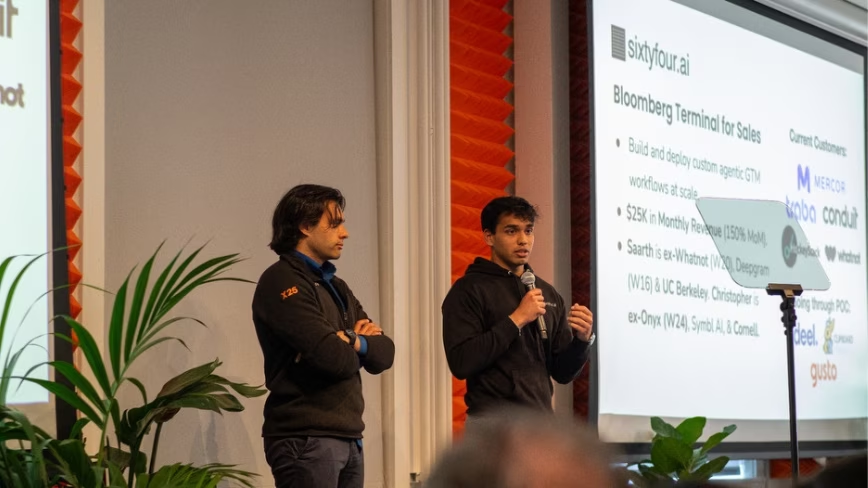
Saarth Shah built Sixtyfour, an AI tool focused on research agents, around a strict principle: verify every output rather than trusting it blindly. Unlike many AI tools that pull from the web and take the generated answers at face value, Sixtyfour grades the performance of its agents continuously. It uses a scoreboard system comparing agent responses to a curated set of expert-verified questions. Only changes that improve this verified score get shipped.
Why builders should care
This approach pressures AI developers to move beyond vague claims of accuracy and puts quantifiable proof at the center of performance. For teams deploying AI agents in sensitive or critical research workflows, this grading method raises the standard for reliability. If your AI solution spits out unchecked answers, you risk building on shaky ground. Graded, score-driven improvement forces accountability and prioritizes what actually works over optimistic marketing or guesswork.
The practical takeaway
Operators running AI-powered research tools or agents should demand measurable benchmarks, not just model sophistication. Building your own evaluation stacks or integrating tools like Sixtyfour’s model grading can cut down on misinformation and improve decision confidence. For founders and investors, this method offers a new way to appraise AI product maturity — track the scorecard, not just user hype.
What to watch next
Expect more AI players to layer verification and scoring into their products, especially in research-heavy or regulated fields where mistakes carry high costs. Look for deeper integration of expert reviewers and curated test sets early in the AI development cycle. The balance will shift from trusting AI claims to proving them with hard metrics before scaling deployments.
AI Quick Briefs Editorial Desk