Nanya plans a $6bn spending surge in 2027 to ride the AI memory boom
The business move
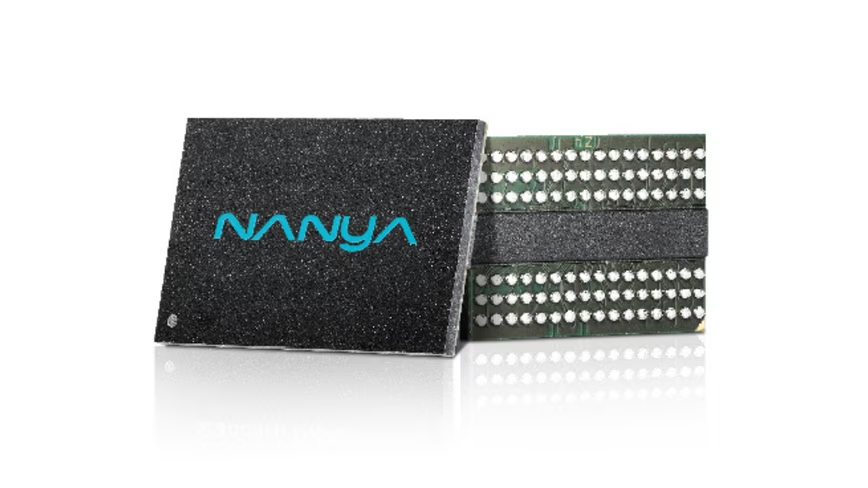
Nanya Technology, a Taiwanese DRAM manufacturer long overshadowed by industry giants like Samsung, SK Hynix, and Micron, is planning a major investment surge. The company intends to spend about $6 billion in 2027 to expand its memory production capacity. This move targets rising demand driven by the AI boom, which has created new pressure on memory supply chains.
Why it matters
Nanya’s spending spike signals that AI growth is shifting the memory market’s dynamics. Memory chips, especially DRAM, are critical for training and running AI models that require large and fast data access. Expansion plans from smaller players like Nanya could tighten the market further, exacerbating supply shortages and pushing up prices. For operators building or scaling AI workloads, this raises the risk of memory supply bottlenecks and cost increases. For investors, it opens the possibility of new winners emerging beyond the traditional top three DRAM suppliers.
Who gains and who gets squeezed
Nanya stands to gain by moving from a peripheral player to a more influential supplier in the DRAM space. OEMs and cloud providers looking for DRAM supply alternatives may find relief if Nanya’s expansion materializes on schedule. Meanwhile, incumbent giants could face sharper competition, which might compress their margins or force them to accelerate their own capacity investments. Buyers of AI infrastructure will likely face tighter memory markets ahead, pushing them to vet supply risk more carefully.
What to watch next
Verification of Nanya’s capacity expansion timeline will be crucial. Operators and investors should watch if this $6 billion investment converts into actual production increases or faces delays. Demand signals from AI sectors will also indicate how aggressively memory makers will need to respond. Any shifts in DRAM supply availability will influence AI project costs and hardware procurement strategies well before 2027.
AI Quick Briefs Editorial Desk