Robot Dogs, Teslas, and Rescue Helicopters: The UN AI Summit Was a Lot

What happened
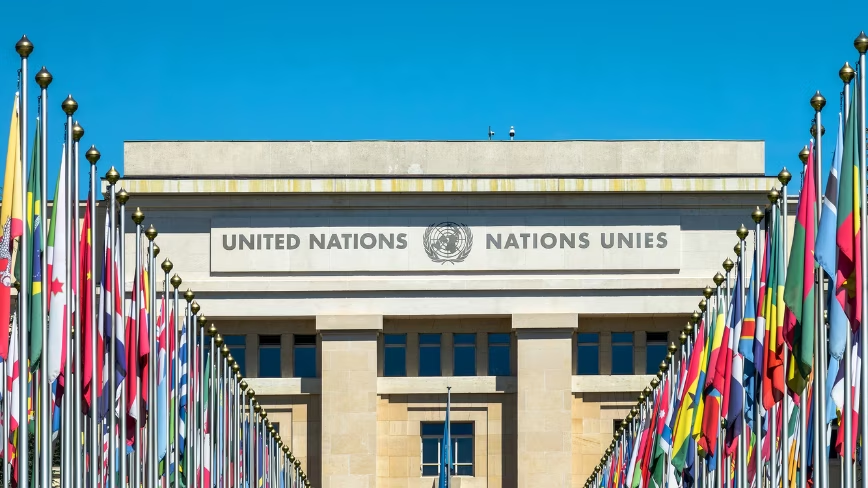
The United Nations held its AI for Good summit, focusing on the rapidly evolving landscape of artificial intelligence and its real-world consequences. The event mixed Silicon Valley optimism with pragmatic concerns, featuring live AI coding sessions alongside demonstrations of robot dogs, Tesla technologies, and rescue helicopters equipped with AI. The summit spotlighted the growing tension between accelerating AI innovations and the slower pace of global governance responses.
Why it matters
AI is outpacing governments’ ability to regulate and manage risks, raising urgent questions about control and oversight. The summit revealed how AI is moving beyond research labs and into high-stakes applications like disaster response and autonomous vehicles. This pressures regulators, companies, and operators to rethink safety, trust, and accountability frameworks before incidents or misuse escalate costs and erode public confidence. For builders and investors, the meeting signaled that future AI deployments will face increasing scrutiny, forcing more careful integration and highlighting the need to align innovation with emerging global rules.
What to watch next
Tracking how international bodies translate conversations from summits into enforceable policies will be critical. Operators should watch for new regulatory designs targeting AI in public safety and transportation, as those fields face rapid deployment. Builders and investors will want to assess how compliance costs may rise and which AI technologies could become restricted or favored under new governance models. The unfolding push for global AI standards could either slow innovation or create new value for players able to meet higher safety and transparency bars.
AI Quick Briefs Editorial Desk