France’s ZML wants to break Nvidia lock-in with free cross-chip AI software
What it does
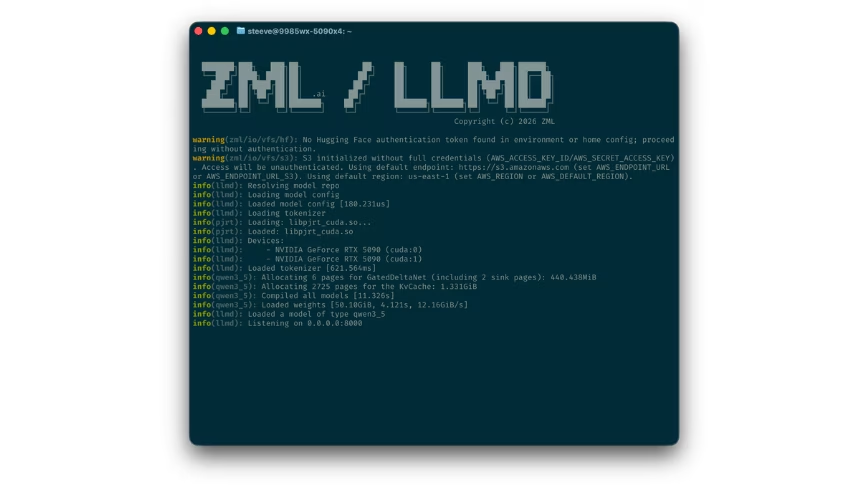
ZML, a Paris-based startup, has launched a free software tool that accelerates AI model inference across multiple hardware platforms. Instead of locking users into Nvidia chips, this tool runs open-source AI models efficiently not only on Nvidia GPUs but also on AMD, Google, Apple, and Intel silicon. The software acts as a compatibility layer to break Nvidia’s exclusive hold on AI hardware performance.
Why it matters
Nvidia still dominates the AI hardware market, creating a vendor lock-in that limits flexibility and raises operating costs for AI developers and businesses. ZML’s tool weakens that grip by making popular AI models run fast on a wider variety of chips. This opens up choices for AI operators who want to avoid Nvidia’s pricing, supply constraints, or ecosystem lock-in. It forces Nvidia to face competition on performance and convenience, which could lower costs and improve hardware innovation.
Who it is for
AI developers building and deploying open-source models will find ZML’s software useful to maximize performance regardless of the hardware they have on hand. Startups, research labs, and enterprises with mixed chip environments can run inference workloads more efficiently without committing to Nvidia-only infrastructure. Investors eyeing alternatives in AI hardware and software stacks may also find this a sign of shifting market dynamics.
The catch
Nvidia still leads on raw AI hardware power and ecosystem maturity. ZML’s tool does not replace hardware but optimizes how models run across chips. Performance may vary depending on the silicon and model specifics. Also, widespread adoption will depend on ongoing support for the latest chips and models amid a fast-moving AI hardware race.
What to watch next
ZML’s next updates will be key to watch for expanded model support and improved speed on diverse hardware. How the major cloud providers and chip manufacturers respond will test whether Nvidia’s lock-in can genuinely loosen. Tracking user adoption and case studies will reveal if cross-chip software can shift AI computing economics and buying patterns.
AI Quick Briefs Editorial Desk