China and the US are now warning against each other’s AI
What happened
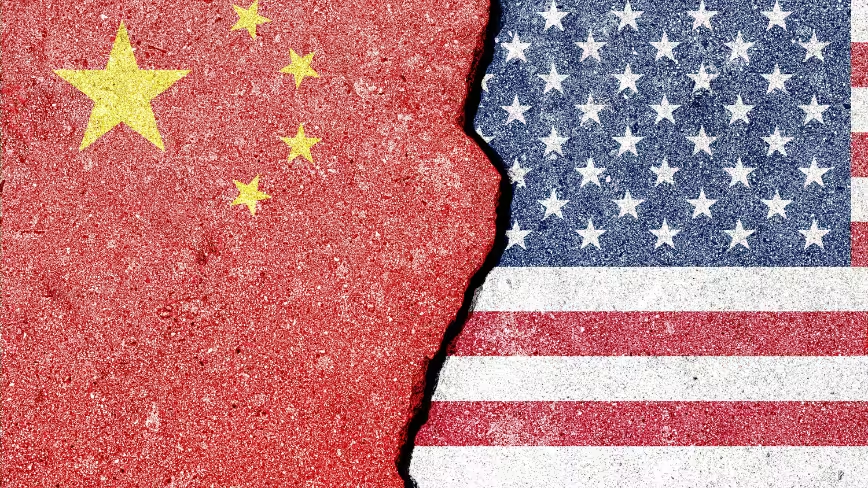
Tensions between the US and China over AI technology hardened this week. China’s Ministry of Industry and Information Technology flagged Anthropic’s Claude Code as a cybersecurity risk, ordering companies to stop using it. The ministry’s cybersecurity platform detected a potential back-door embedded in Claude Code’s coding tool, raising national security alarms. Meanwhile, US lawmakers moved to penalize American AI companies that depend heavily on Chinese AI models, aiming to curb exposure to potential foreign risks.
Why it matters
The US-China AI rivalry is now explicitly pressuring AI tooling and product flows, doubling down on tech sovereignty and cybersecurity concerns. For builders and businesses, this means higher friction when using AI services that cross these geopolitical lines. The Chinese government’s ban on Claude Code signals riskier conditions for foreign AI tools in China, pushing local companies to shift away or face punitive scrutiny. On the US side, lawmakers’ actions threaten to raise costs and slow adoption for firms relying on more affordable Chinese AI models, encouraging a push towards domestically controlled AI infrastructure.
This split tightens operational risks for companies working internationally with AI. Using Chinese models may invite regulatory penalties or reputational risks in the US, while deploying US-based tools risks access or compliance problems in China. Businesses must rethink AI sourcing and partnerships, factoring in national security as an integral part of AI risk management, not just technical or economic considerations.
What to watch next
Check how both countries enforce these new restrictions in the coming months. Will US regulations on Chinese model reliance trigger a scaling back of Chinese AI models in US firms? Will China’s push against Anthropic products expand to other foreign AI platforms? The evolving policy moves could fragment AI ecosystems, forcing developers and operators to choose between market access and compliance burdens. International AI collaboration and supply chains may weaken, altering where investments flow and how AI products evolve globally.
AI Quick Briefs Editorial Desk