Nomagic’s warehouse robots got an AI brain, and it halved the calls for human help
What happened
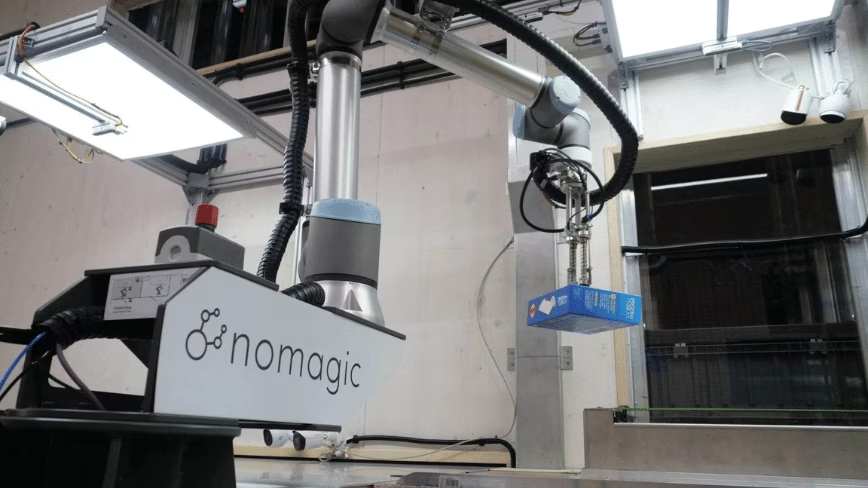
Nomagic, a warehouse robotics company based in Warsaw, integrated a vision-language-action (VLA) AI model into its live operations. This model connects the robot’s cameras, language processing, and action capabilities in one system. Since deployment, Nomagic says the AI has cut the frequency of robots getting stuck and needing human help by around half. The model is developed in their new AI lab, which is led by a former Google DeepMind researcher focused on mastering specific tasks before pursuing general AI capabilities.
Why it matters
Warehouse robots often rely on human intervention to clear up operational stalls, driving up labor costs and reducing efficiency. By slashing those calls for help by 50%, Nomagic’s AI brain reduces reliance on human operators, accelerates throughput, and cuts downtime. This practical improvement shows how combining vision and language understanding with robotic control can fix common robot blind spots in real time. Nomagic’s approach also signals a shift toward more specialized, task-specific AI acquisition over chasing broad general intelligence, which could speed up practical deployments in logistics and manufacturing.
What to watch next
Watch how Nomagic scales this model across different warehouses and robot types. The real challenge is maintaining or improving the human fallback rate as robots face more complex, varied environments. Other warehouse automation players will feel pressure to add integrated AI vision-language models or fall behind in operational efficiency. The leadership of a DeepMind veteran suggests Nomagic’s lab might produce more focused AI breakthroughs aimed directly at operational bottlenecks beyond just perception, potentially reshaping industrial robotics over the next few years.
AI Quick Briefs Editorial Desk