UiPath’s Dines: not hiring juniors is a mistake
What changed
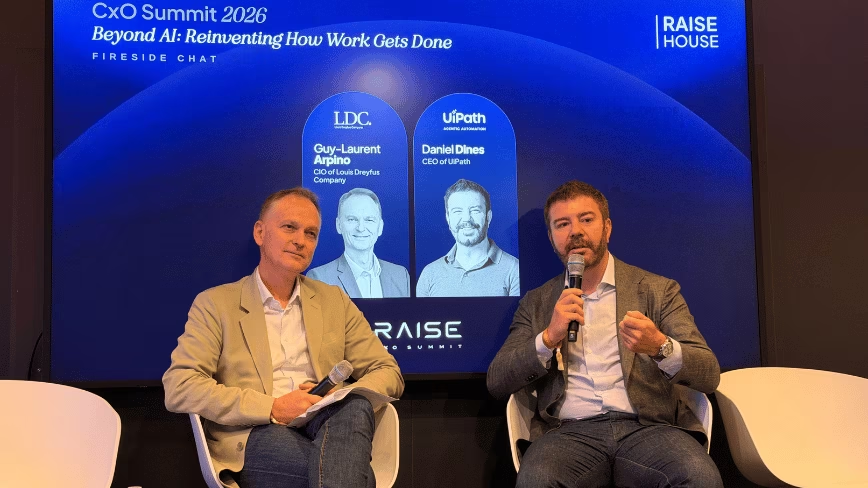
UiPath’s CEO Daniel Dines pinpointed a critical roadblock at the Raise summit in Paris: AI projects often stall because companies skip hiring junior talent. Many enterprises get stuck in pilot stages with AI agents failing to graduate into full production. Dines argues the solution is less about refining models and more about involving junior staff early.
Why builders should care
Dines highlights a recurring operational trap where teams run pilots that never scale. Cutting out juniors narrows the workforce to seniors who may be too set in traditional automation or AI workflows. This limits fresh perspectives and hands-on experimentation crucial for navigating real-world AI deployment. Ignoring juniors adds friction to moving AI agents from tests to live environments, costing time and resources.
The practical takeaway
For enterprises building AI automation or agent systems, this means investing in talent pipelines is not optional. Junior staff bring the bandwidth to test, iterate, and iron out deployment kinks that stall projects. Businesses should balance their teams to include juniors who can drive scaling, freeing seniors to focus on strategy and improvements. This shift reduces the risk of valuable projects languishing indefinitely in pilots.
What to watch next
Watch how UiPath’s stance influences hiring patterns in AI operations teams and enterprise automation budgets. If more companies take Dines’ advice seriously, expect a push for structured junior programs to accelerate AI deployment at scale. Also track whether other CxOs echo this people-first approach over black-box model tweaks as a fix for stalled AI pilots.
AI Quick Briefs Editorial Desk