NVIDIA Releases Audex (Nemotron-Labs-Audex-30B-A3B): A Unified Audio-Text LLM That Preserves the Text Intel…
What it does
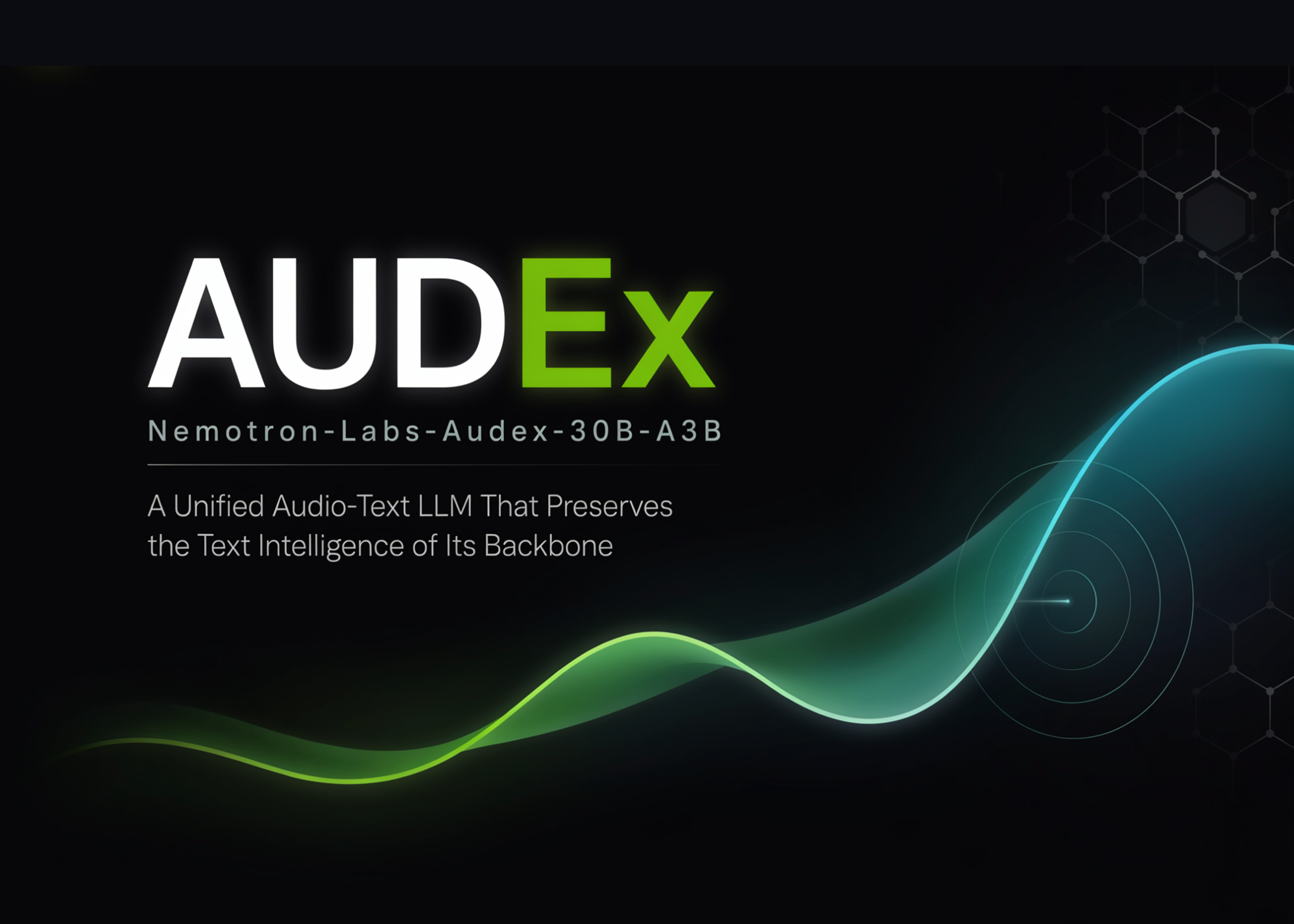
NVIDIA rolled out Nemotron-Labs-Audex-30B-A3B, a multimodal model that combines audio and text capabilities into a single architecture. It integrates functions like speech recognition, translation, text-to-speech (TTS), and audio generation within one Mixture of Experts (MoE) framework. The model leverages the Nemotron-Cascade-2 text backbone and retains nearly all of its natural language understanding strength with only slight regression after adapting to audio tasks.
Why it matters
Combining audio processing and text understanding into one scalable model eases operational complexity for developers and businesses working with speech and language AI. Instead of running multiple specialized models for transcription, translation, and speech synthesis, users get a single model serving the full pipeline. This can reduce latency and deployment overhead while preserving strong language comprehension. For builders, it sets a reference on minimizing trade-offs between text knowledge and audio adaptation in large language models.
Who it is for
This release targets AI developers building voice assistants, transcription services, multilingual communication tools, or audio content generation. Enterprises wanting to consolidate their speech and language AI infrastructure may find the unified approach cost-effective and operationally simpler. Researchers studying multimodal LLMs will also benefit from how Nemotron-Labs-Audex-30B-A3B balances audio inclusion without degrading text intelligence.
The catch
The model carries marginal regression in text tasks after audio training, signaling some performance trade-offs remain. Integration of all audio tasks could increase model size and inference resource needs, which might limit edge or low-resource deployment. Details on training data scale, benchmarking against leading audio-only models, and real-world application results will be key before wide adoption.
What to watch next
Watch for performance benchmarks comparing Audex against dedicated speech recognition and TTS models. How NVIDIA licenses or integrates this in their AI ecosystem could shift competitive dynamics in voice AI tooling. Also, any announcements about commercial deployments or developer APIs will show if this unified design reduces costs and improves user experience in production environments.
AI Quick Briefs Editorial Desk