Tools vs. Subagents: Building Effective AI Agents Without Over-Engineering
Quick take
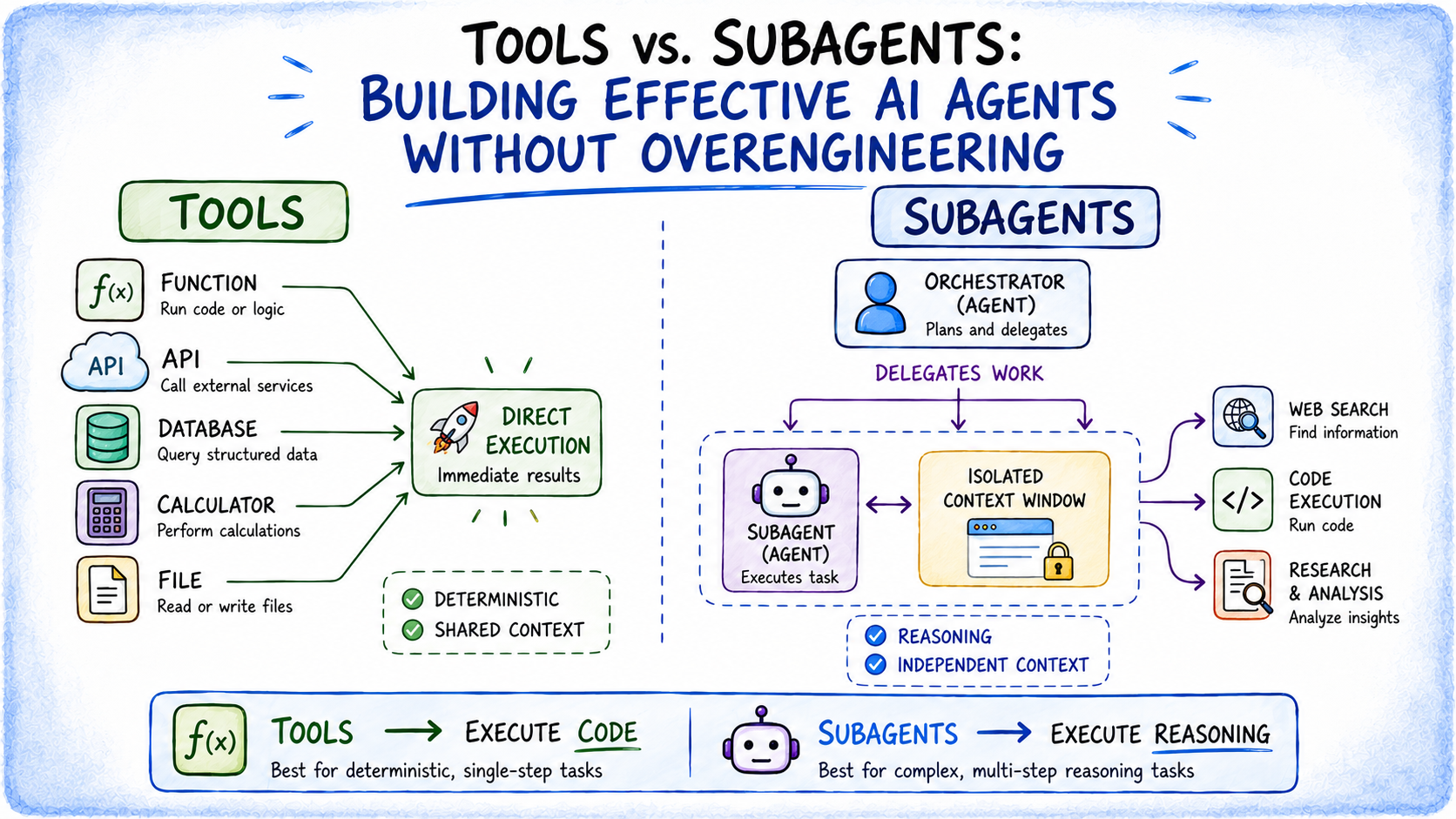
AI agents can either use tools or subagents to execute tasks, but the difference is crucial for builders aiming to avoid over-engineering. Tools are designed to execute code directly, handling specific functions efficiently without added complexity. Subagents, by contrast, require building additional AI layers that manage decision-making and communication between components, adding overhead and potential maintenance challenges.
Why it matters
Understanding when to deploy tools versus subagents changes how quickly and reliably developers can deliver AI workflows. Tools streamline operations by focusing on direct execution, which lowers the risk of lag, errors, and excessive resource consumption. Overbuilding agents with layered subcomponents can slow development, raise costs, and introduce points of failure without clear benefits. Builders focused on speed and reliability should consider prioritizing effective tools that do one thing well instead of constructing complex subagent hierarchies that may not improve outcomes.
The discipline to use tools for straightforward tasks and reserve subagents for genuinely autonomous decision-making accelerates deployment and reduces technical debt. This approach places pressure on AI developers to be more deliberate in system architecture and avoid unnecessary complexity that slows innovation and operational efficiency.
AI Quick Briefs Editorial Desk