SQL vs Pandas vs AI Agents: Which Solves Analytics Problems Best?
What changed
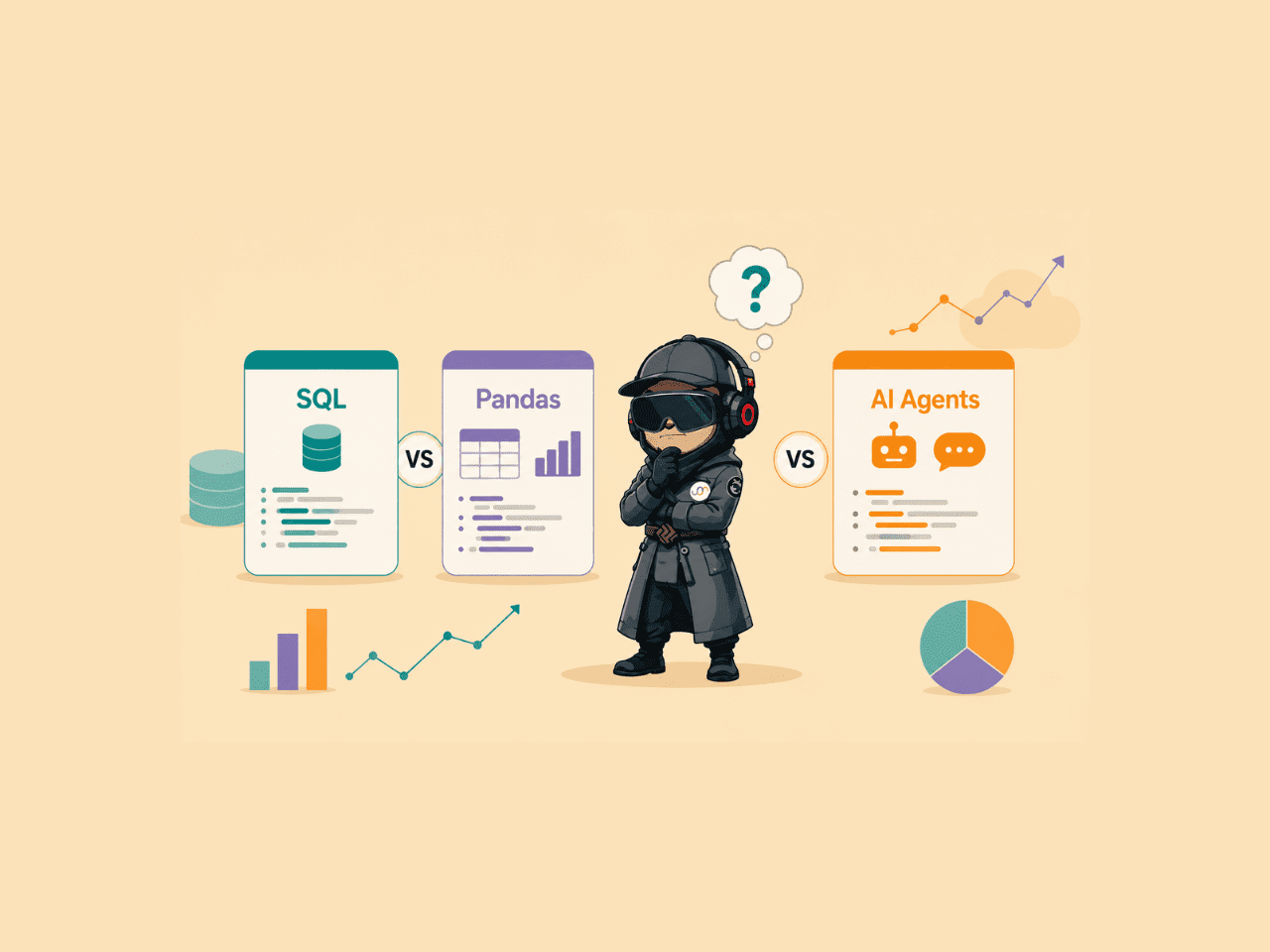
A detailed comparison pitted SQL, Pandas, and AI agents against each other on three common analytics tasks. The evaluation used real execution times, actual agent prompts, and measured performance across eight dimensions. The goal was to see which tool handles typical analytics challenges most effectively in a practical setting rather than in theory.
Why builders should care
SQL remains the benchmark for raw speed and control when directly querying structured data. Pandas offers more flexibility for tabular data manipulation in Python but can struggle with large datasets or complex queries. AI agents stand out by automating problem solving through natural language prompts but vary widely in reliability and cost. Understanding these trade-offs helps developers pick the right tool for their workload rather than defaulting to hype or habit.
The practical takeaway
If speed and precision matter, especially on large datasets, sticking with SQL query engines is still the best bet. For exploratory data cleaning and transformation where coding flexibility is key, Pandas remains a strong choice. AI agents fit well when quick insights or automation of repetitive tasks are needed without heavy coding—though expect variability in execution time and accuracy. The study’s use of real-world prompts and timed runs gives operators a clearer picture of the operational costs and benefits of each approach.
What to watch next
Look for AI agent improvements around more consistent prompt handling and tighter integration with databases and data frames. The main pressure is on closing gaps in speed and accuracy while maintaining usability. Developers should also watch if hybrid workflows evolve, mixing AI agents with SQL or Pandas to automate complex pipelines without losing performance or control.
AI Quick Briefs Editorial Desk