Getting Started with Hugging Face ML Intern: Your First ML Agent
What it does
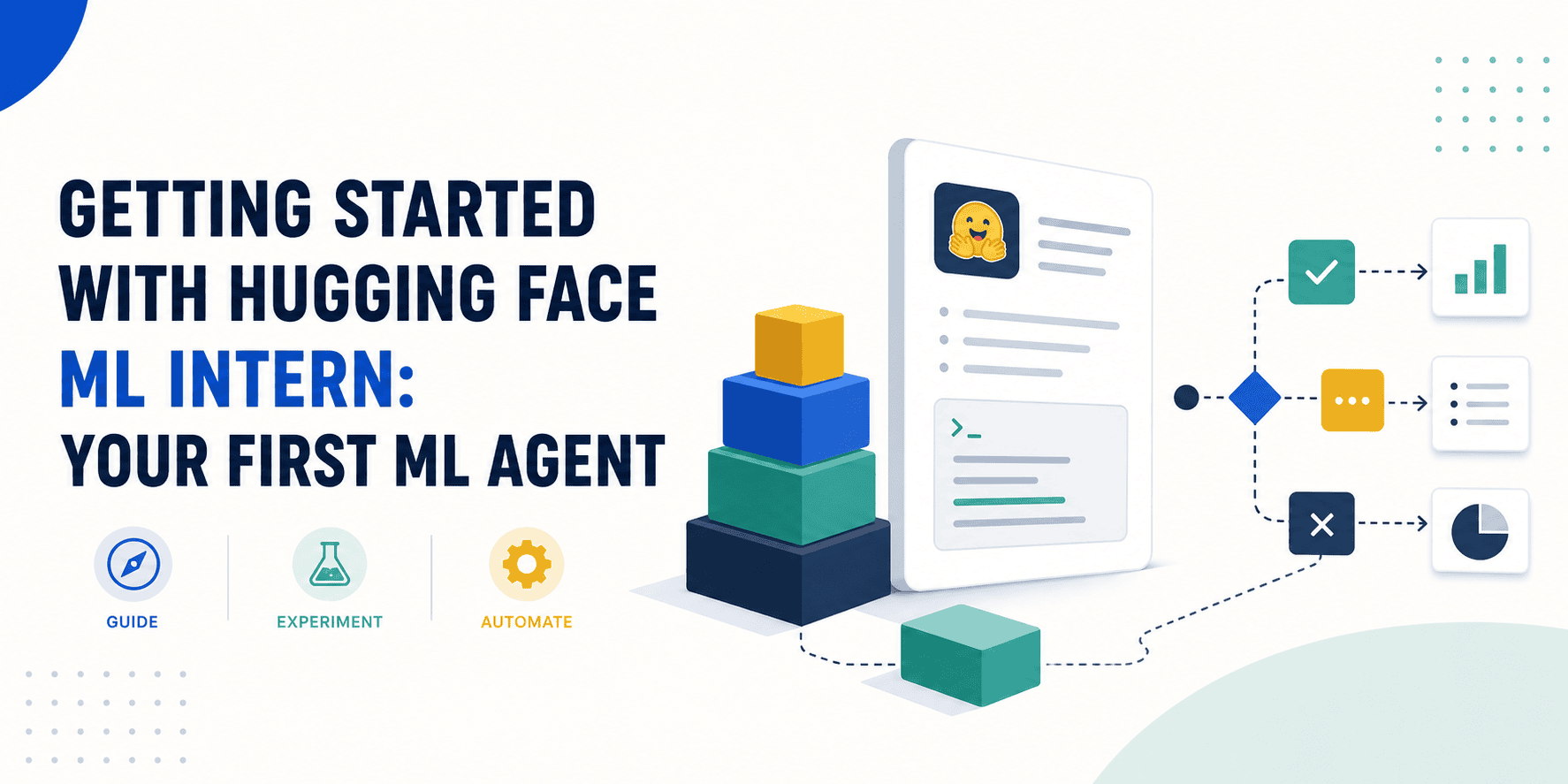
Hugging Face’s ML Intern is an AI assistant designed to automate the machine learning workflow. You describe the model you want, and ML Intern writes the training code, executes the training process, and eventually ships the model checkpoint. Essentially, it acts as a junior ML engineer that handles routine tasks from start to finish.
Why it matters
Building and tuning ML models requires writing complex code and managing compute resources, which can slow down experimentation and deployment. ML Intern speed-ramps this process by turning natural language prompts into fully functioning training pipelines, lowering the barrier to entry for ML development. This reduces manual overhead and helps small teams or individual researchers build working models faster without deep coding or infrastructure skills.
Who it is for
ML Intern targets builders who want to prototype or train ML models with minimal friction. It is especially useful for developers who have well-defined goals but want to avoid plumbing details like coding boilerplate or managing checkpoints. Smaller startups, solo AI practitioners, or teams looking to accelerate model iteration without dedicated MLOps resources will find this particularly valuable.
The catch
ML Intern automates routine ML tasks but will not replace expert ML engineers or data scientists. The system depends on the quality of input prompts and might produce suboptimal or generic training code if instructions are vague. Effective use requires some prior ML knowledge to guide it and review outputs. It still requires compute resources for training, so costs and infrastructure remain factors.
What to watch next
Adoption will hinge on how well ML Intern handles diverse model types and complex workflows beyond simple training loops. Watch for updates that extend its automation to model evaluation, hyperparameter tuning, and deployment pipelines. Integration with collaborative tools and transparency features for auditability could make it a standard assistant for ML teams. Also, its success will pressure traditional ML tooling vendors to simplify interfaces or embed automation.
AI Quick Briefs Editorial Desk


