5 Ways Small Language Models Are Powering Next-Gen Agents
Quick take
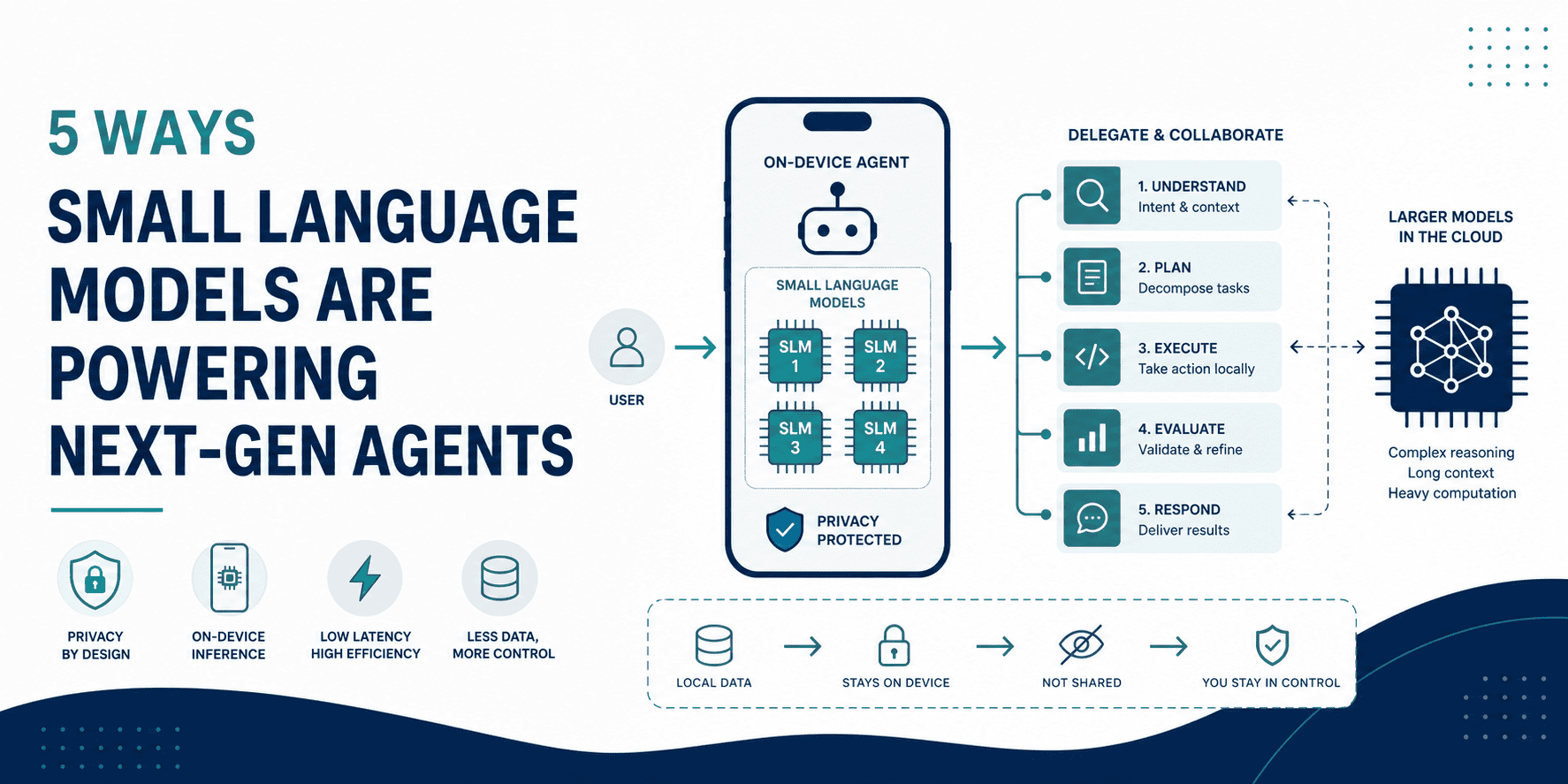
Small language models are gaining traction as practical engines inside next-generation AI agents. They offer a way to cut costs and complexity while still delivering strong performance on specialized tasks. Unlike giant frontier models, these smaller models stay nimble, making them a smart option for real-world applications where resources and latency matter.
Why it matters
SLMs reduce the trade-off between power and efficiency in AI agents. They can be fine-tuned and deployed locally on edge devices or integrated into cloud-based workflows with less compute overhead. For operators and builders, this means faster iteration cycles, lower infrastructure expenses, and wider access to AI-driven automation. The rise of effective small models challenges the notion that larger always means better, especially for task-specific or privacy-sensitive roles.
Practical impacts show up in how SLMs enhance agent abilities, such as improved memory through retrieval augmentations, better task orchestration via modular pipelines, and more reliable self-correction mechanisms. These benefits tighten control for builders while expanding options to customize AI behavior beyond preset large-model limitations.
The push toward smaller models also shifts the economics and competitive landscape. Companies investing heavily in massive models face pressure as smaller, smarter agents cut costs and complexity. This trend rewards those who focus on engineering clever model architectures and tooling instead of chasing scale alone.
AI Quick Briefs Editorial Desk


